Amazon Fire TV Stick Lawsuit: Class Action, Claims and Latest Updates
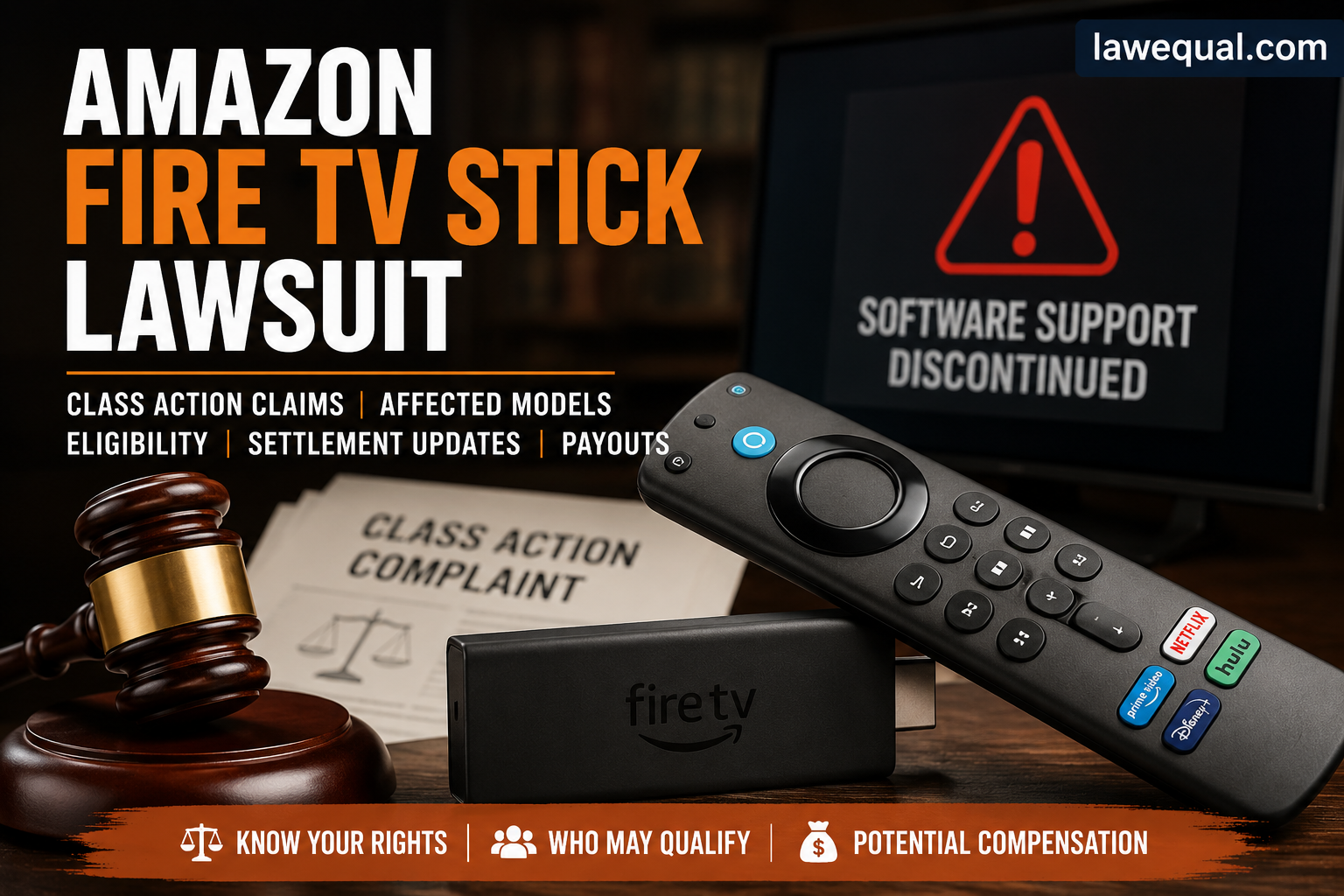
The Amazon Fire TV Stick Lawsuit has raised questions about how long smart streaming devices should remain useful after customers buy them. A proposed class action claims Amazon made some older Fire TV Stick models slow, difficult to use, or nearly unusable after ending software support.
The case mainly concerns first-generation and second-generation Fire TV Stick devices. The plaintiff alleges that Amazon did not clearly tell buyers that ending software support could reduce the devices’ core streaming functions.
It is important to understand that these claims remain allegations. The court has not ruled that Amazon intentionally damaged Fire TV Sticks, and the proposed class has not been certified.
What Is the Amazon Fire TV Stick Lawsuit?
The Amazon Fire TV Stick lawsuit is a proposed consumer class action involving older generations of Amazon’s popular streaming device.
The plaintiff, Bill Merewhuader, alleges that Amazon ended important software support for older Fire TV Sticks and left some of those devices with poor performance.
The complaint focuses on the first-generation Fire TV Stick, introduced in 2014, and the second-generation model, introduced in 2016.
According to the allegations, these devices depended on continued software support to deliver the streaming experience customers expected.
The plaintiff argues that Amazon did not adequately disclose this dependency when consumers purchased the devices.
Amazon has not been found liable for these claims. The case remains a legal dispute, and the allegations must go through the court process.
Amazon Fire TV Stick Lawsuit Overview
The lawsuit centers on a simple question: What happens when a physical product still works, but the software needed to make it useful no longer receives support?
Streaming sticks need more than working hardware. They depend on an operating system, security fixes, application compatibility, and other software services.
The lawsuit alleges that Amazon’s decision to end support significantly reduced the usefulness of certain early Fire TV Stick models.
Who Filed the Lawsuit Against Amazon?
California resident Bill Merewhuader is the named plaintiff in the case.
According to the complaint, Merewhuader purchased two second-generation Fire TV Stick devices from Best Buy in 2018.
He says the devices initially worked as expected. Over time, however, he allegedly experienced serious performance problems.
The complaint says the Fire TV Sticks became slow and difficult to use. Merewhuader eventually replaced the devices with newer hardware in 2024.
He argues that he would not have purchased the older devices, or would have paid less for them, if Amazon had clearly disclosed their alleged software limitations.
When and Where Was the Lawsuit Filed?
The lawsuit was initially filed in the Superior Court of California for Los Angeles County in April 2026.
The case is known as Merewhuader v. Amazon.com, Inc., et al.
Amazon later removed the case to federal court. It reached the U.S. District Court for the Central District of California in May 2026.
The parties later agreed to transfer the case to the U.S. District Court for the Western District of Washington, where Amazon is headquartered.
The California federal court approved that transfer in June 2026.
Why Was the Class Action Filed?
The plaintiff claims Amazon sold Fire TV Stick devices without clearly explaining how ending software support could affect their future usefulness.
The lawsuit alleges that Amazon promoted convenient and fast streaming while failing to adequately disclose the alleged limited software lifespan of early models.
The plaintiff also argues that consumers should not have to replace physically working hardware simply because essential software support ends.
These allegations form the basis of the proposed consumer class action.
What Does the Amazon Fire TV Stick Lawsuit Allege?
The lawsuit makes several claims about Amazon’s handling of older Fire TV Stick devices.
At the center of the complaint is the allegation that ending software support caused or contributed to major performance problems.
Claims That Older Fire TV Sticks Were “Bricked”
The complaint uses the idea of “bricking” to describe what allegedly happened to certain older Fire TV Sticks.
A bricked electronic device normally refers to hardware that can no longer perform its main purpose because of a software or firmware problem.
In this case, the plaintiff does not simply claim that every device suddenly stopped turning on.
Instead, the allegation is that software-related limitations made some devices so slow or unreliable that they became effectively unusable for their intended streaming purpose.
That distinction matters because an old device becoming slower over time does not automatically prove intentional bricking.
The court will need to consider the evidence behind the plaintiff’s claims.
Allegations About Ending Software Support
According to the complaint and reporting about the case, software support for the first-generation Fire TV Stick ended around December 2022.
The lawsuit says support for the second-generation model ended around March 2023.
The plaintiff also alleges that Amazon had created an expectation that certain second-generation devices would receive support for longer.
The exact meaning and legal importance of Amazon’s support statements could become an important issue in the case.
Claims of Slow Performance, Buffering, and Device Failure
The complaint describes problems such as slow menus, lag, buffering, app problems, and reduced overall functionality.
A streaming device depends on both its hardware and software environment.
As streaming apps change, older operating systems may struggle to meet new technical requirements.
The lawsuit argues that Amazon’s control over software support played an important role in the decline of these devices.
However, the case has not established that Amazon caused every performance issue experienced by every owner.
Alleged Pressure on Customers to Buy Newer Devices
Another major allegation is that customers were effectively pushed toward newer Fire TV products.
If an older streaming stick becomes too slow or cannot properly run popular apps, replacing it may become the easiest solution for a consumer.
The plaintiff claims this situation benefited Amazon because customers could purchase newer Fire TV hardware.
The lawsuit therefore connects the alleged loss of functionality with concerns about planned obsolescence.
Amazon has not been found by a court to have intentionally followed such a plan.
What Is “Software Tethering”?
Software tethering describes a situation where the usefulness of a physical product depends heavily on software controlled by its manufacturer.
Modern televisions, phones, smart speakers, watches, streaming devices, and home appliances increasingly work this way.
A consumer may own the hardware, but the manufacturer continues to control important software updates and services.
If those services disappear, the product may lose important features even when its physical components still work.
How Software Support Affects Streaming Devices
A Fire TV Stick connects a television to streaming services and apps through software.
Its operating system needs to communicate with applications such as streaming platforms, music services, and other digital services.
Developers regularly update these applications.
Older operating systems may eventually become incompatible with new versions of apps.
Security requirements, video formats, digital rights management systems, and streaming technology can also change.
As a result, software support can strongly affect how long a streaming device remains useful.
Why Software Tethering Matters in the Lawsuit
The lawsuit argues that buyers were not adequately informed about how dependent their Fire TV Sticks were on Amazon’s continuing software support.
This allegation goes beyond normal hardware wear.
The plaintiff’s position is that physically functional hardware allegedly lost important usefulness because of software decisions controlled by Amazon.
The case could therefore contribute to a wider discussion about consumer rights in connected devices.
Which Fire TV Stick Models Are Affected?
The lawsuit does not target every Fire TV device Amazon has ever sold.
Its main focus is on the first two generations of the standard Fire TV Stick.
First-Generation Fire TV Stick
Amazon introduced the first Fire TV Stick in 2014.
The compact device allowed consumers to add streaming functions to a television through an HDMI connection.
According to the lawsuit, Amazon ended software support for the first-generation model in December 2022.
Owners who purchased these devices many years ago may therefore fall within the group discussed in the proposed lawsuit, depending on the final class definition.
Second-Generation Fire TV Stick
Amazon released its second-generation Fire TV Stick in 2016.
It offered improvements over the original product and became another widely used streaming device.
The lawsuit says software support for this generation ended in March 2023.
The named plaintiff says he owned two second-generation devices and experienced worsening performance before replacing them.
Are Newer Fire TV Stick Models Included?
The current proposed class action focuses primarily on first- and second-generation Fire TV Sticks.
Owning a newer Fire TV Stick does not automatically make someone part of this case.
Amazon has released many newer products, including Fire TV Stick 4K models and later generations with improved processors and software.
Consumers should therefore identify their exact model rather than assume that every device carrying the Fire TV Stick name is involved.
When Did Amazon End Software Support?
Software-support dates are central to the allegations.
The complaint links the alleged decline in device usefulness with the end of support for early models.
Software Support for First-Generation Devices
The lawsuit says software support for the first-generation Fire TV Stick ended in December 2022.
By that point, the original model had been on the market for about eight years.
The legal dispute is not simply about whether an older device eventually stopped receiving updates.
The plaintiff’s argument focuses on whether Amazon properly disclosed the importance and expected length of software support when selling the products.
Software Support for Second-Generation Devices
According to the allegations, support for second-generation Fire TV Sticks ended in March 2023.
The plaintiff claims this was especially important because customers allegedly had reason to expect support to continue longer.
Whether Amazon made legally enforceable promises about support will depend on the evidence and the court’s interpretation.
What Happened After Support Ended?
Older devices did not necessarily stop functioning immediately on the day support ended.
Instead, functionality can decline gradually.
Apps may stop supporting an old operating system. New features may not work, and streaming platforms may introduce technical requirements that older hardware cannot meet.
This gradual decline helps explain why the lawsuit discusses devices becoming increasingly difficult to use rather than simply shutting down at one exact moment.
What Problems Did Fire TV Stick Owners Report?
The lawsuit and related reports describe several types of performance issues involving older devices.
These problems can make streaming frustrating even if a device still powers on.
Slow Loading and Lag
Lag occurs when a device takes too long to respond to commands.
Menus may open slowly, apps may take longer to launch, and navigation can feel delayed.
The plaintiff alleges that his second-generation devices became increasingly slow.
However, age, storage limitations, application demands, internet performance, and other technical factors can also affect device speed.
Frequent Buffering
Buffering occurs when streamed content pauses while the device waits for more data.
A poor internet connection can cause buffering, but software and hardware limitations may also contribute.
The lawsuit references the streaming experience because Fire TV Sticks were sold primarily as easy ways to watch digital content.
App Compatibility Problems
App compatibility becomes increasingly important as a streaming device ages.
Streaming companies regularly change their software and technical requirements.
Older Fire OS versions may eventually lose compatibility with newer versions of popular applications.
For example, some older Fire TV hardware has lost support from certain streaming services as technology has moved forward.
This does not by itself prove the lawsuit’s allegations, but it shows why ongoing software support matters.
Also Read: Blake Lively Lawsuit
Freezing and Device Failure
An older Fire TV Stick may freeze while navigating menus or opening apps.
Severe performance problems can make the device impractical for everyday use.
The plaintiff alleges that his devices reached a point where replacement became necessary.
Whether Amazon bears legal responsibility for those problems remains disputed.
Amazon’s Marketing Claims and the Lawsuit
Marketing is another important part of the complaint.
The lawsuit alleges that Amazon promoted the convenience and streaming performance of Fire TV Stick products without adequately explaining their dependence on continued software support.
How Fire TV Stick Streaming Was Advertised
Amazon marketed Fire TV Stick devices as simple streaming products that could quickly provide access to entertainment.
That convenience was a major reason consumers purchased streaming sticks instead of more expensive smart televisions or media systems.
The lawsuit points to representations involving quick or “instant” streaming as part of its allegations.
The plaintiff argues that consumers reasonably expected the devices to perform their basic streaming function for an appropriate period.
What the Plaintiff Says Amazon Failed to Disclose
The complaint alleges that Amazon did not adequately warn buyers that stopping software support could seriously affect device functionality.
Consumers generally understand that electronics become old.
The legal issue is whether Amazon withheld material information that reasonable consumers would have considered before purchasing the products.
If buyers knew a device’s important software functions had a specific limited lifespan, they might make a different purchase decision.
That argument plays a central role in the consumer-protection claims.
Device Lifespan and Software Support Concerns
The case highlights the difference between physical lifespan and functional lifespan.
A Fire TV Stick can remain physically intact while becoming less useful because its software environment has changed.
This issue now affects many smart products.
Consumers increasingly want manufacturers to explain how long connected products will receive security updates, operating-system support, and essential software services.
Legal Claims in the Amazon Fire TV Stick Lawsuit
The complaint includes several legal theories connected to consumer rights and the purchase of the devices.
These remain allegations unless proven or otherwise resolved through the legal process.
Consumer Protection Claims
The plaintiff alleges violations of California consumer-protection laws.
Such laws generally aim to protect consumers against unfair, misleading, or deceptive business practices.
The lawsuit argues that information about software support and potential loss of functionality mattered to consumers.
The court will ultimately decide whether the alleged conduct violated applicable law.
Deceptive Marketing Allegations
The complaint also challenges how Amazon allegedly represented the Fire TV Stick’s streaming abilities.
The plaintiff argues that Amazon promoted important benefits while failing to adequately disclose software limitations that could later affect those benefits.
A successful deceptive-marketing claim generally requires more than showing that a product eventually became outdated.
The plaintiff must establish the required legal elements based on the representations, omissions, purchases, and alleged harm.
Breach of Contract Claims
The case also raises contractual allegations.
These claims relate to what consumers allegedly received compared with what they reasonably understood they were buying.
Contract claims can depend heavily on the exact terms that existed when a product was purchased.
Amazon may dispute both the interpretation of those terms and whether any contractual obligation was broken.
Planned Obsolescence Allegations
Planned obsolescence generally describes designing or managing a product so consumers replace it sooner than they otherwise might.
The lawsuit presents the alleged software decisions as part of this broader concern.
The plaintiff argues that ending critical support encouraged consumers to purchase newer devices.
At this stage, however, this remains an allegation rather than an established finding that Amazon deliberately made devices obsolete to generate replacement sales.
Who May Be Covered by the Proposed Class Action?
The proposed class definition is important because not every Fire TV Stick owner would necessarily qualify.
The class has also not yet been certified by the court.
Potential Nationwide Class
The complaint proposes a nationwide group involving certain U.S. consumers who purchased affected Fire TV Stick generations.
Reported proposed definitions include people who bought a first-generation Fire TV Stick and still owned it as of January 1, 2023.
The proposed group also includes qualifying purchasers of second-generation Fire TV Sticks who still owned their devices as of April 1, 2023.
These dates relate closely to the alleged end of software support.
The final definition could change if the court later certifies a class.
California Consumers and Proposed Subclasses
The lawsuit also proposes subclasses involving California consumers.
This makes sense because the named plaintiff lives in California and several claims rely on California consumer laws.
A court must determine whether the requirements for class treatment have been met.
Until then, these groups remain proposed rather than officially certified classes.
How to Check Which Fire TV Stick Generation You Own
Owners should first determine the exact Fire TV Stick model they purchased.
The device’s settings, model number, purchase history, original packaging, or receipt may help identify it.
Do not rely only on appearance.
Different Fire TV Stick generations can look similar, and later products may share branding with older versions.
Knowing the purchase year can also help narrow down the model.
Amazon Fire TV Stick Lawsuit Eligibility
Many consumers searching for this case want to know whether they qualify for money.
At this stage, there is no approved settlement claims process.
Do Fire TV Stick Owners Need Proof of Purchase?
No settlement administrator has announced documentation requirements because there is currently no settlement claim process for this case.
If the lawsuit eventually produces compensation, proof requirements would depend on the final agreement or court-approved process.
Consumers may therefore want to keep receipts, retailer purchase records, Amazon order histories, emails, model information, and other documents.
Keeping records does not guarantee eligibility.
It simply makes it easier to prove ownership if documentation becomes important later.
Can Former Fire TV Stick Owners Qualify?
Possibly, depending on the final class definition and what happens in the case.
The proposed class uses ownership dates connected with the alleged end of support.
A person who later discarded or replaced an affected device might still meet a future definition if all other requirements apply.
However, consumers should not assume eligibility until a court certifies a class or approves a settlement with clear requirements.
Can You Join the Lawsuit Right Now?
There is no public settlement claim form to complete at this stage.
The lawsuit is still proceeding as a proposed class action.
In most class actions, eligible consumers do not simply submit a settlement claim immediately after a complaint gets filed.
First, the case must move through important legal stages.
If a settlement later receives approval, consumers would normally receive instructions explaining eligibility, deadlines, documentation, and how to submit claims.
What Compensation Is the Lawsuit Seeking?
The plaintiff seeks several forms of relief.
The exact amount, if any, that consumers could eventually receive has not been determined.
Damages for Affected Consumers
The lawsuit seeks monetary damages on behalf of affected consumers.
Damages could relate to alleged financial losses caused by reduced device value or the need to replace products.
The amount would depend on the claims that survive, evidence, class size, and how the case ends.
Refunds and Restitution
Restitution generally aims to return money or value allegedly obtained unfairly.
The complaint seeks financial relief connected to purchases of the affected Fire TV Stick devices.
A court has not ordered Amazon to provide refunds.
Therefore, owners should be cautious about websites or social-media posts suggesting that automatic refunds are already available.
Other Relief Requested in the Case
The lawsuit also seeks other forms of legal relief.
These can include orders aimed at changing or preventing the challenged business practices.
Class actions often request attorney fees and costs when allowed by law as well.
What relief becomes available will depend on the outcome of the litigation.
Is There an Amazon Fire TV Stick Lawsuit Settlement?
As of August 2026, there is no publicly announced settlement in this proposed class action.
Consumers should keep this distinction clear when reading headlines about the lawsuit.
Has Amazon Agreed to a Settlement?
No publicly reported settlement has been reached in the Merewhuader Fire TV Stick case as of August 2026.
The existence of a lawsuit does not mean a company has agreed to pay consumers.
Cases can end through dismissal, settlement, trial, or other legal outcomes.
It is too early to know exactly how this dispute will end.
Is There a Settlement Claim Form?
There is currently no approved settlement claim form for this proposed class action.
Consumers should be careful with websites that ask for sensitive information while claiming guaranteed Fire TV Stick lawsuit payments.
An official claims process normally appears only after a settlement reaches the appropriate stage and consumers receive formal instructions.
Is There a Claim Deadline?
No settlement claim deadline currently exists because there is no approved settlement claims program.
If the parties eventually settle the case, an official notice would normally state important dates.
Those dates could include a claim deadline, objection deadline, exclusion deadline, and final approval hearing.
Are Any Payouts Available Yet?
No confirmed consumer payout is currently available from this lawsuit.
That means owners should not expect an immediate check simply because they purchased an older Fire TV Stick.
Future compensation remains possible, but it is not guaranteed.
How Much Could Fire TV Stick Owners Receive?
There is no confirmed payout amount.
Any dollar figure circulating without an approved settlement should be treated as speculation.
Factors That Could Affect a Future Payout
If a settlement or judgment eventually provides consumer compensation, several factors could determine individual payments.
These could include the number of eligible devices, purchase price, number of valid claims, available settlement fund, and documented losses.
Attorney fees, administrative expenses, and other approved costs can also affect the amount distributed in a class action settlement.
The final payment structure could be completely different depending on how the litigation develops.
Why No Payout Amount Is Confirmed Yet
Courts do not automatically award money simply because someone files a class action complaint.
The plaintiff must first establish the case or the parties must negotiate a settlement.
Class certification can also become a major issue.
Until those steps occur, calculating an accurate Fire TV Stick lawsuit payout would be premature.
Current Status of the Amazon Fire TV Stick Lawsuit
The case is still at an early stage compared with a completed class action settlement.
It has already moved between courts.
Where the Case Stands in 2026
The case began in California state court and was removed to federal court.
It was then transferred from the Central District of California to the U.S. District Court for the Western District of Washington in June 2026.
The transferred case has been reported under case number 2:26-cv-02248-BAT in the Western District of Washington.
Procedural developments do not mean that a court has accepted the plaintiff’s allegations as true.
They concern where and how the lawsuit proceeds.
Has the Proposed Class Been Certified?
As of August 2026, no class has been certified in this lawsuit.
This is an important legal distinction.
News reports commonly use the phrase “class action lawsuit” to describe a complaint seeking class status.
But a proposed class does not become a certified class until the court grants certification.
What Could Happen Next?
Several outcomes remain possible.
Amazon may challenge some or all of the allegations, and the parties may dispute whether the case can proceed as a class action.
The case could move into discovery, where the parties exchange evidence and information.
A judge could also dismiss certain claims while allowing others to continue.
The parties could eventually negotiate a settlement, or the dispute could continue toward later court proceedings.
There is no guarantee of a settlement.
What Has Amazon Said About the Lawsuit?
Public reporting around the initial lawsuit stated that Amazon had not publicly provided a detailed substantive response to the allegations.
That does not mean Amazon accepts the claims.
Defendants generally have opportunities to challenge allegations through court filings and legal arguments.
Consumers should therefore distinguish between what the complaint alleges and facts that a court has established.
The plaintiff presents one side of the dispute, while Amazon can contest liability, causation, damages, class certification, and other issues.
What Should Fire TV Stick Owners Do?
Owners of first- or second-generation Fire TV Sticks do not need to panic.
There is currently no settlement deadline requiring immediate action.
Keep Purchase Records and Receipts
Keep any documents that show when and where you purchased your Fire TV Stick.
Useful records can include receipts, online order confirmations, retailer account histories, emails, and credit-card records.
These documents could help establish ownership if a claims process becomes available later.
Identify Your Fire TV Stick Model
Determine whether your device is actually a first- or second-generation Fire TV Stick.
Write down its model number and other identifying information.
Take a photo of the device information if needed and keep it with your purchase records.
This can prevent confusion if you later need to prove which model you owned.
Keep Records of Device Problems
Consumers who experienced major performance problems can keep basic records describing what happened.
For example, note when serious lag, freezing, app failures, or other problems began.
Screenshots, photographs, support communications, and replacement purchase records may also provide useful documentation.
This does not establish that Amazon caused those problems, but accurate records can preserve information.
Watch for Official Court or Settlement Notices
Consumers should rely on verified court information and official settlement notices if the case reaches that stage.
Be careful with advertisements promising guaranteed payouts.
Scammers sometimes take advantage of popular class action news by creating fake claim pages.
Never pay someone simply to submit a standard class action settlement claim without first verifying that the process is legitimate.
Amazon Fire TV Stick Lawsuit vs. Other Fire TV Lawsuits
Not every lawsuit mentioning Fire TV relates to the alleged bricking of older streaming sticks.
Amazon faces many types of litigation because it operates a large technology and retail business.
Fire TV Stick Performance Lawsuit
The case discussed throughout this article is Merewhuader v. Amazon.com, Inc., et al.
It focuses on allegations involving software support and the performance of first- and second-generation Fire TV Stick devices.
This is the lawsuit most consumers mean when searching for information about allegedly “bricked” Fire TV Sticks in 2026.
Fire TV Privacy and Data Collection Cases
Other legal disputes can involve privacy, advertising technology, user data, patents, or other aspects of connected televisions and streaming devices.
Those cases may mention Fire TV products without involving the same consumer allegations.
Patent litigation involving Fire TV technology, for example, concerns different legal rights from the consumer class action described here.
Why Consumers Should Not Confuse Different Cases
Mixing different lawsuits can lead to incorrect information about settlements and eligibility.
A settlement in one Amazon-related case does not automatically apply to Fire TV Stick owners in another case.
Always check the case name, court, allegations, affected products, and dates.
This is especially important before submitting personal information to any claims website.
Frequently Asked Questions
Is There Really a Lawsuit Against Amazon Over Fire TV Sticks?
Yes. A proposed class action was filed against Amazon involving certain older Fire TV Stick devices.
The plaintiff alleges that ending software support caused first- and second-generation devices to lose important functionality. Amazon has not been found liable for these allegations.
Why Is Amazon Being Sued Over Fire TV Stick Devices?
The plaintiff claims Amazon failed to adequately disclose that ending software support could significantly reduce the usefulness of older Fire TV Sticks.
The complaint also alleges that affected consumers were pushed toward replacing older devices with newer hardware.
Which Amazon Fire TV Sticks Are Part of the Lawsuit?
The lawsuit primarily concerns first-generation Fire TV Sticks released in 2014 and second-generation models released in 2016.
Newer Fire TV Stick models are not automatically included simply because they carry the same product name.
Did Amazon Intentionally Brick Older Fire TV Sticks?
The plaintiff alleges that Amazon effectively bricked older devices by ending critical software support.
However, this is an allegation. A court has not established that Amazon intentionally made the devices unusable.
Is the Amazon Fire TV Stick Lawsuit a Class Action?
It is a proposed class action.
The plaintiff wants to represent larger groups of consumers, but the court has not yet certified the proposed class.
Can I Join the Amazon Fire TV Stick Lawsuit?
There is currently no settlement claim form that affected consumers can submit.
If the court certifies a class or a settlement creates a claims process, eligible consumers should receive instructions explaining their options.
Is There a Fire TV Stick Settlement?
No publicly announced settlement has been reached in this consumer lawsuit as of August 2026.
The case remains ongoing, so claims of guaranteed settlement payments should be treated carefully.
How Do I File an Amazon Fire TV Stick Lawsuit Claim?
You cannot currently file a settlement claim because no approved settlement claims program exists.
For now, potentially affected consumers can preserve purchase information and monitor future case developments.
How Much Money Could Fire TV Stick Owners Get?
No payout amount has been announced.
Any future compensation would depend on the outcome of the case, class definition, alleged damages, settlement terms, and number of eligible consumers.
When Will the Amazon Fire TV Stick Lawsuit Be Resolved?
There is no confirmed resolution date.
Class actions can take months or years because they may involve motions, discovery, class certification, settlement negotiations, appeals, or trial.
Conclusion
The Amazon Fire TV Stick Lawsuit raises an important question about modern connected products: how much responsibility does a manufacturer have when a device’s usefulness depends on continued software support? The proposed class action alleges that Amazon failed to adequately disclose software limitations and effectively left some first- and second-generation Fire TV Sticks slow or unusable.
For now, consumers should remember that these are allegations, not proven findings. No class has been certified, no settlement claim form is available, and no payout has been confirmed as of August 2026. Owners of potentially affected devices can keep their purchase and model records while following future developments in the case.
One Comment