
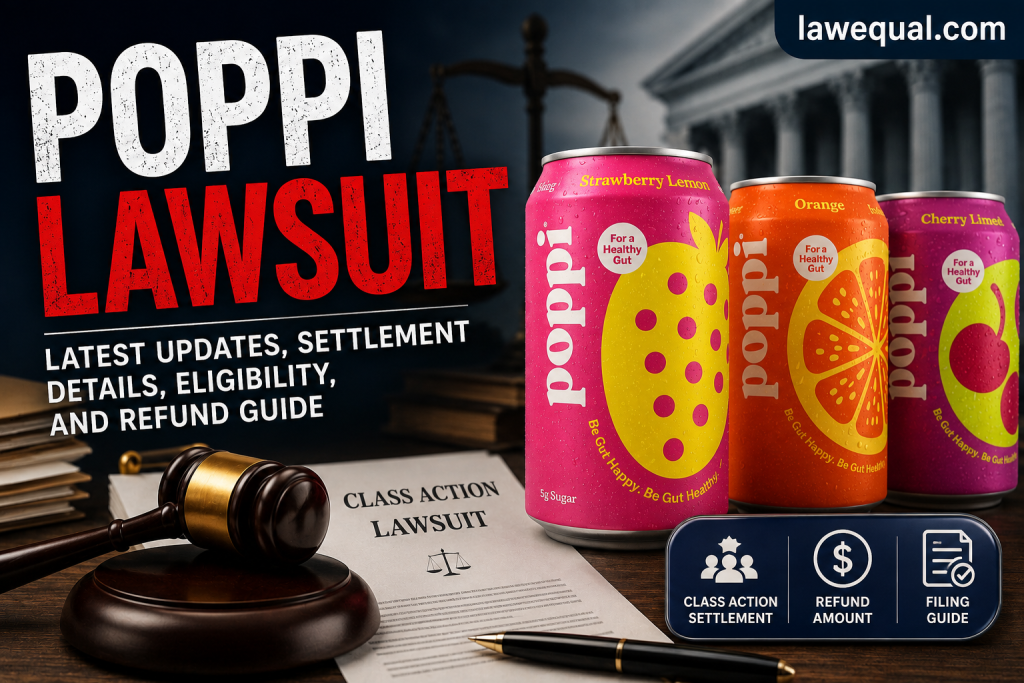
Poppi Lawsuit: Latest Settlement Updates, Claims, Eligibility, and Refund Details (2026)
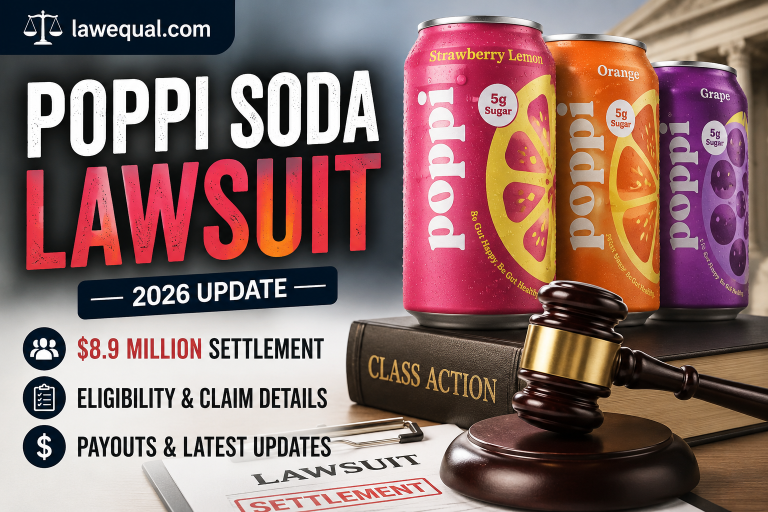
The Poppi Lawsuit is a class action lawsuit filed against Poppi, the popular prebiotic soda brand, over claims that its drinks were marketed as promoting gut health without enough scientific evidence to support those statements. The lawsuit argues that many consumers bought Poppi because they believed the beverages would provide meaningful digestive health benefits.
Poppi became one of the fastest-growing beverage brands in the United States by promoting its products as a healthier alternative to traditional soda. Its marketing included phrases such as “Be Gut Happy. Be Gut Healthy.” These statements became the center of the legal dispute.
The company denied any wrongdoing. However, instead of continuing a lengthy legal battle, it agreed to settle the case by creating an $8.9 million settlement fund for eligible consumers. The settlement is designed to resolve the lawsuit without admitting liability.
The Poppi Lawsuit has received nationwide attention because it raises important questions about health-related advertising, consumer protection laws, and how beverage companies promote functional drinks.
Why Is Poppi Being Sued?
The lawsuit claims that Poppi marketed its beverages in a way that led customers to believe the drinks offered significant gut health benefits.
Consumers alleged they paid higher prices because they trusted these health claims. According to the lawsuit, the advertised benefits were not supported by enough scientific evidence to justify the company’s marketing messages.
The legal complaint focuses on whether Poppi’s advertisements could mislead reasonable consumers.
Although Poppi contains ingredients such as apple cider vinegar and prebiotic fiber, plaintiffs argued that the amount included in each can was too small to provide meaningful digestive health benefits.
As a result, the lawsuit accused the company of violating consumer protection and false advertising laws.

The Gut Health Advertising Claims
One of the biggest issues in the Poppi Lawsuit involves the company’s gut health marketing.
Poppi promoted itself as a prebiotic soda that supports digestive wellness. Its advertisements suggested that drinking Poppi could improve gut health while providing a healthier soda option.
Many consumers believed these statements when deciding to purchase the drinks.
The lawsuit argues that each can contains about 2 grams of prebiotic fiber, which plaintiffs say is not enough to create the digestive benefits highlighted in the company’s advertising.
The complaint also states that a person would need to consume much larger amounts of prebiotic fiber to experience noticeable gut health improvements.
Health experts have noted that while prebiotic fiber can benefit digestion, the total daily intake matters more than the amount found in a single beverage. This scientific debate became a key part of the case.
What Consumers Alleged in the Lawsuit
Consumers claimed they would not have purchased Poppi—or would have paid less for it—if they had known the products allegedly did not provide the advertised digestive benefits.
The lawsuit says buyers relied on product labels, online advertisement, and promotional campaigns that emphasized gut health.
Plaintiffs argued that these marketing statements influenced purchasing decisions.
The lawsuit also claims consumers paid premium prices because Poppi was marketed differently from ordinary soft drinks.
According to the complaint, the company benefited financially while consumers allegedly received fewer health benefits than expected.
Importantly, the lawsuit does not claim that Poppi drinks are unsafe.
Instead, it focuses on whether the company’s health-related advertising accurately reflected the product’s actual benefits.
Who Filed the Poppi Class Action Lawsuit?
The original class action lawsuit was filed in the United States by consumer Kristin Cobbs in 2024.
She alleged that Poppi’s marketing overstated the gut health benefits of its beverages and violated consumer protection laws.
After additional similar lawsuits were filed, the cases were consolidated into one larger class action proceeding.
The lawsuit sought financial compensation for consumers who purchased Poppi products believing they offered significant digestive health benefits.
Rather than continuing litigation through trial, both sides later reached a proposed settlement.
Also Read: Venmo Class Action Lawsuit
Timeline of the Poppi Lawsuit
Understanding the timeline helps explain how the case developed from the first complaint to the proposed settlement.
When the Lawsuit Was Filed
The legal dispute began in 2024 when consumers filed lawsuits challenging Poppi’s marketing practices.
The complaints argued that the company’s gut health claims lacked sufficient scientific support and may have misled customers.
The lawsuits quickly gained media attention because Poppi had become one of the fastest-growing functional beverage brands in the country.
Major Court Developments
After the initial lawsuits were filed, several similar consumer complaints were combined into one class action case.
Both sides exchanged legal filings and evidence while discussing a possible resolution.
Instead of proceeding to a lengthy trial, negotiations eventually resulted in a proposed settlement agreement.
Throughout the legal process, Poppi consistently denied that it violated any laws or intentionally misled consumers.
Settlement Announcement
In 2025, Poppi agreed to settle the class action lawsuit by establishing an $8.9 million settlement fund.
The settlement allows eligible consumers who purchased Poppi beverages during the covered period to submit claims for compensation.
Importantly, the agreement states that Poppi does not admit wrongdoing and continues to deny the allegations made in the lawsuit. The settlement was reached to avoid the cost, uncertainty, and time involved in continued litigation.
Poppi Settlement Details
The Poppi Lawsuit moved into the settlement stage after both sides agreed to resolve the dispute without a trial. Instead of continuing litigation for several more years, Poppi and the plaintiffs reached a proposed class action settlement.
The agreement creates a settlement fund that eligible consumers can use to seek reimbursement for qualifying purchases. The settlement still requires final court approval before all payments are issued.
How Much Is the Settlement Worth?
The proposed settlement establishes an $8.9 million fund.
This money is intended to pay eligible claims, administrative costs, attorneys’ fees approved by the court, service awards to the class representatives, and other settlement-related expenses. Any remaining funds will be distributed according to the settlement agreement approved by the court.
The actual payment each consumer receives depends on several factors, including:
- The number of valid claims submitted
- Whether proof of purchase is provided
- The total amount of eligible purchases
- Court-approved deductions
Because class action settlements divide a fixed settlement fund among eligible claimants, the final payment amount cannot be guaranteed in advance.
Did Poppi Admit Any Wrongdoing?
No.
One of the most common questions about the Poppi Lawsuit is whether the company admitted its advertising was misleading.
The answer is no.
Like many companies involved in class action settlements, Poppi agreed to settle the case without admitting fault or liability. The settlement documents state that the company continues to deny the allegations made by the plaintiffs.
Settling the lawsuit allows both parties to avoid the expense and uncertainty of a lengthy court trial.
What Changes Did Poppi Agree to Make?
Besides creating the settlement fund, Poppi also agreed to certain business practice changes as part of the settlement.
These changes generally relate to future marketing and advertising of its products.
Although the company may continue promoting its beverages, the settlement addresses how gut health claims may be presented going forward. The exact requirements are outlined in the settlement documents and are intended to reduce future consumer disputes.
Who Is Eligible for the Poppi Settlement?
Many people want to know whether they qualify for compensation under the Poppi Lawsuit settlement.
Eligibility depends on whether a consumer purchased qualifying Poppi beverages during the covered purchase period identified in the settlement.
Consumers should review the official settlement notice to confirm that their purchases meet all requirements.
Eligible Purchase Dates
The settlement applies only to purchases made during the court-approved class period.
Consumers who bought Poppi drinks before or after the covered dates may not qualify.
The settlement administrator uses these dates to determine whether a claim falls within the eligible purchase window.
Products Covered by the Settlement
The settlement generally covers qualifying Poppi prebiotic soda products sold in the United States during the class period.
Eligible purchases may include many flavors sold through:
- Grocery stores
- Retail chains
- Warehouse clubs
- Convenience stores
- Online retailers
The exact list of qualifying products appears in the official settlement documents.
Proof of Purchase Requirements
Consumers with receipts usually have stronger documentation for their claims.
Acceptable proof of purchase may include:
- Store receipts
- Digital purchase history
- Online order confirmations
- Retail account records
However, many class action settlements also allow consumers without receipts to submit claims, although reimbursement limits may be lower.
The final payment depends on the settlement rules and the documentation provided.
How to File a Poppi Settlement Claim
If you qualify, filing a claim under the Poppi Lawsuit is generally a straightforward process.
Consumers can usually submit claims online or by mail before the deadline established by the court.
Following the instructions carefully helps prevent delays.
Step-by-Step Claim Process
The process generally includes these steps:
- Confirm you qualify for the settlement.
- Gather proof of purchase if available.
- Complete the official claim form.
- Submit supporting documents.
- Review your information for accuracy.
- Submit the claim before the deadline.
After submission, the settlement administrator reviews each claim before approving payments.
Claim Deadline
Every class action settlement has a filing deadline.
Claims submitted after that deadline are generally not eligible unless the court orders otherwise.
Consumers should avoid waiting until the final day because missing information or technical issues could delay submission.
The settlement website lists the official deadline along with important court dates.
Required Documents
The documents needed depend on the type of claim.
Common documents include:
- Purchase receipts
- Digital invoices
- Loyalty account purchase history
- Order confirmation emails
If receipts are unavailable, consumers should follow the instructions provided in the settlement claim form.
Providing accurate information helps speed up claim processing.
How Much Money Can Consumers Receive?
One of the biggest questions surrounding the Poppi Lawsuit is the possible payment amount.
The answer varies because class action settlements divide available funds among all approved claimants.
No payment amount is guaranteed.
Payments With Proof of Purchase
Consumers who provide valid proof of purchase may qualify for reimbursement based on the number of eligible Poppi products they purchased.
Generally, documented purchases receive higher reimbursement than undocumented claims because the settlement administrator can verify them more easily.
The final amount also depends on how many valid claims are filed.
Payments Without Proof of Purchase
Consumers who no longer have receipts may still qualify for compensation.
Many settlements allow reimbursement without proof of purchase, but they usually place a limit on the number of products that can be claimed.
These limits help reduce fraudulent claims while allowing legitimate customers to participate.
The exact reimbursement rules are described in the settlement agreement.
When Settlement Payments May Be Sent
Settlement payments are not sent immediately after a claim is submitted.
Several steps must happen first:
- Final court approval
- Resolution of any appeals
- Claim review
- Payment calculation
- Distribution of funds
Because these legal steps take time, consumers may need to wait several months before receiving payment after final approval.
What Were the Main Allegations Against Poppi?
The Poppi Lawsuit centers on claims that the company marketed its prebiotic sodas as providing meaningful gut health benefits without enough scientific evidence to support those promises.
Consumers argued that Poppi’s advertising encouraged people to buy the drinks because they believed they would improve digestion and overall gut wellness. According to the lawsuit, these marketing claims influenced purchasing decisions and allowed the company to charge premium prices.
The lawsuit does not allege that Poppi products are unsafe to drink.
Instead, it focuses on whether the company’s health-related advertising accurately represented the benefits consumers could reasonably expect from the beverages.
False Advertising Claims
One of the primary claims in the Poppi Lawsuit is that the company’s advertising may have misled consumers.
The lawsuit argues that slogans and promotional materials suggested Poppi drinks could significantly improve gut health. Plaintiffs claimed these statements caused customers to pay more for the products than they otherwise would have.
The complaint alleges that these representations violated consumer protection and false advertising laws.
Companies that make health-related marketing claims must ensure those statements are supported by reliable evidence. Whether Poppi’s advertising met that standard became a central legal issue in the case.
Prebiotic Fiber and Gut Health Debate
The lawsuit also sparked a wider discussion about prebiotic fiber and digestive health.
Poppi drinks contain agave inulin, which is a type of prebiotic fiber. Prebiotics can help nourish beneficial bacteria in the digestive system.
However, the lawsuit argues that each can contains only about 2 grams of fiber, which plaintiffs say is too little to provide the significant gut health benefits promoted in the company’s advertising.
Nutrition experts generally agree that prebiotic fiber can support digestive health as part of an overall balanced diet.
However, they also note that the total amount of fiber consumed throughout the day matters more than any single beverage. Whole foods such as fruits, vegetables, beans, whole grains, and legumes remain the best sources of dietary fiber.
The debate created by the Poppi Lawsuit has encouraged many consumers to look more closely at functional beverage marketing.
Consumer Protection Laws
The lawsuit was filed under California consumer protection statutes that prohibit deceptive or misleading advertising.
The plaintiffs argued that consumers deserve truthful information when companies advertise health benefits.
Consumer protection laws exist to help ensure that buyers can make informed purchasing decisions based on accurate product claims.
Although the legal dispute ended in a proposed settlement, it also reminded many businesses that health claims often receive close scrutiny from regulators, courts, and consumers.
Poppi’s Response to the Lawsuit
Throughout the legal proceedings, Poppi consistently denied the allegations made against the company.
The company stated that it stands behind its products and believes the lawsuit lacked merit. Poppi also emphasized its commitment to providing lower-sugar alternatives to traditional soft drinks.
Even after agreeing to settle the case, Poppi did not admit that it violated any law.
The settlement specifically states that the agreement is not an admission of wrongdoing. Instead, the company chose to resolve the litigation to avoid additional legal costs and uncertainty.
The settlement allows Poppi to move forward while giving eligible consumers an opportunity to seek reimbursement.
Scientific Debate Over Poppi’s Gut Health Claims
The Poppi Lawsuit has generated significant discussion among nutrition experts, healthcare professionals, and consumers.
While many experts agree that prebiotic fiber can support digestive health, opinions differ regarding whether the amount contained in Poppi beverages provides meaningful benefits.
The lawsuit itself does not determine scientific truth. Instead, it questions whether the company’s marketing accurately reflected the available evidence.
What Is Prebiotic Fiber?
Prebiotic fiber is a type of dietary fiber that feeds beneficial bacteria living in the digestive system.
These bacteria help support several normal body functions, including digestion and gut microbiome balance.
Common natural sources of prebiotic fiber include:
- Garlic
- Onions
- Bananas
- Asparagus
- Chicory root
- Whole grains
- Beans
Many functional beverages now include added prebiotic fiber to attract health-conscious consumers.
Do Poppi Drinks Support Gut Health?
There is no simple yes-or-no answer.
Poppi beverages do contain prebiotic fiber, but experts point out that they should not be viewed as a replacement for a fiber-rich diet.
Many registered dietitians recommend getting most daily fiber from whole foods instead of relying on beverages alone.
The lawsuit argued that consumers were led to expect greater digestive benefits than the product could reasonably provide.
Poppi, however, denied those allegations throughout the case.
Expert Opinions
Many nutrition professionals agree on several important points:
- Prebiotic fiber may support digestive health.
- Whole foods remain the best source of fiber.
- Functional beverages can be part of a balanced diet but should not replace healthy eating habits.
- Consumers should carefully evaluate health claims made in product advertising.
The Poppi Lawsuit has also encouraged consumers to read nutrition labels more carefully and understand that no single drink can replace an overall healthy lifestyle.
How the Poppi Lawsuit Could Affect Consumers
The Poppi Lawsuit may have lasting effects beyond the settlement itself.
Consumers are becoming more aware of how food and beverage companies advertise health benefits.
Many shoppers now compare nutrition labels, ingredient lists, and scientific evidence before buying functional beverages.
The lawsuit also reminds consumers to keep receipts whenever possible.
Proof of purchase can make it easier to participate in future class action settlements if they become eligible.
In addition, many buyers are learning more about consumer protection laws and how class action lawsuits help address advertising disputes.
How the Poppi Lawsuit Could Affect the Beverage Industry
The outcome of the Poppi Lawsuit may influence how beverage companies market products in the future.
Brands that promote health benefits may review their advertising to ensure claims are supported by scientific evidence.
Companies may also use more precise wording when describing potential wellness benefits.
The functional beverage industry has grown rapidly in recent years, with products containing probiotics, prebiotics, vitamins, and botanical ingredients becoming increasingly popular.
As this market expands, businesses may face greater attention from consumers, regulators, and courts regarding health-related marketing claims.
Frequently Asked Questions
Is the Poppi Lawsuit Real?
Yes. The Poppi Lawsuit is a real class action case filed in the United States. Consumers alleged that Poppi’s marketing overstated the gut health benefits of its prebiotic sodas.
The company denied these allegations but later agreed to an $8.9 million proposed settlement without admitting any wrongdoing. The settlement still required court approval before payments could be distributed.
Is the Poppi Settlement Approved?
The settlement was proposed after negotiations between the parties.
Like most class action settlements, it must complete the court approval process before payments are issued. Consumers should check the official settlement administrator for updates regarding final approval and payment schedules.
Can I Still File a Poppi Claim?
Whether you can still file a claim depends on the settlement deadlines.
If the claim period is still open, eligible consumers may submit a claim following the instructions provided by the settlement administrator.
If the deadline has already passed, new claims generally cannot be accepted unless the court orders otherwise.
How Do I Check My Claim Status?
After submitting a claim, consumers can usually check its status through the settlement administrator.
You may need information such as:
- Your claim confirmation number
- Email address
- Name used on the claim form
If additional documentation is required, the administrator may contact you before the claim is approved.
Does the Settlement Cover Every Poppi Flavor?
The settlement generally covers qualifying Poppi products purchased during the approved class period.
However, eligibility depends on the exact terms of the settlement agreement.
Consumers should review the official settlement notice to determine whether their specific purchases qualify.
Where Can I Find the Official Settlement Website?
The official settlement website contains important information, including:
- Eligibility requirements
- Claim forms
- Frequently asked questions
- Court documents
- Important deadlines
- Contact information
Consumers should always rely on the official settlement administrator for the most accurate and up-to-date information regarding their claims.
Final Thoughts on the Poppi Lawsuit
The Poppi Lawsuit has become one of the most talked-about consumer class action cases involving health-related beverage marketing. The lawsuit focused on whether Poppi’s advertising gave consumers the impression that its drinks provided greater gut health benefits than could be supported by available scientific evidence.
Although Poppi denied all allegations, the company agreed to an $8.9 million settlement to resolve the dispute without admitting wrongdoing. The settlement offers eligible consumers an opportunity to seek compensation while avoiding the uncertainty of a lengthy court battle.
The case also serves as a reminder that consumers should carefully evaluate health claims made in advertisements. Reading nutrition labels, understanding product ingredients, and reviewing reliable scientific information can help buyers make informed purchasing decisions.
For beverage companies, the lawsuit highlights the importance of ensuring that marketing claims are supported by credible evidence. As consumer demand for functional drinks continues to grow, businesses will likely face greater scrutiny regarding the health benefits they advertise.
Whether you purchased Poppi products or are simply following consumer protection news, staying informed about the Poppi Lawsuit can help you understand your rights, the settlement process, and the broader impact this case may have on future food and beverage marketing.