Switched At Birth Lawsuit: What Happened and Latest Updates
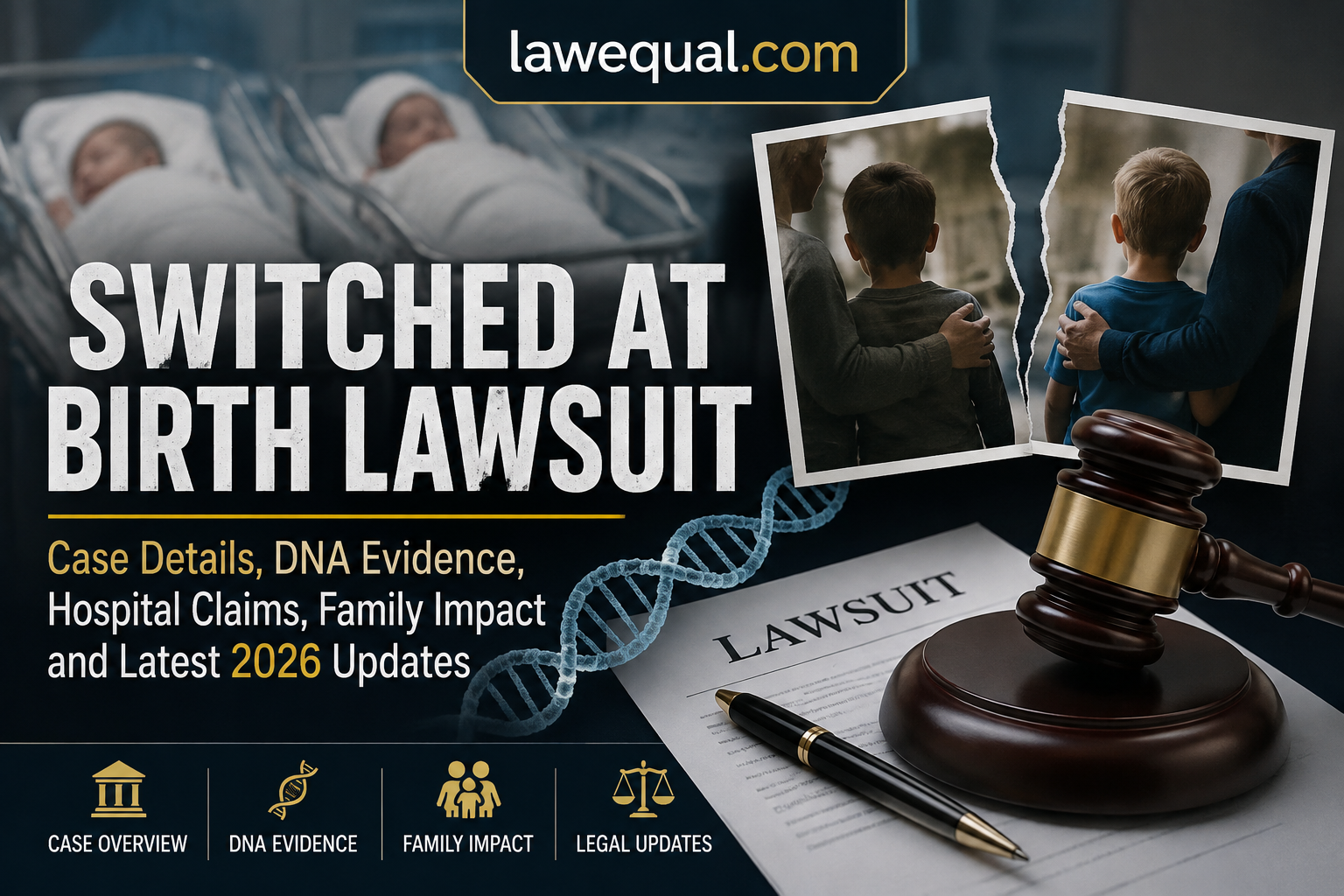
The Switched At Birth Lawsuit has gained national attention after two men said they discovered that a North Dakota hospital sent them home with each other’s biological parents nearly four decades ago. Kyle Bylin and Jeremy Morrison say DNA testing finally uncovered a mistake that had remained hidden for most of their lives.
The case involves Unity Medical Center in Grafton, North Dakota. According to the lawsuit, Bylin and Morrison were born at the hospital on January 26, 1988, only hours apart. The families allege that hospital staff mixed up the newborn boys before they went home.
The discovery did much more than correct a birth record. It changed how both men understood their identities, parents, siblings, childhoods, and family histories.
The families have now taken their claims to court. They seek accountability for the emotional harm and lost family experiences they say resulted from the alleged hospital error.
What Is the Switched At Birth Lawsuit?
The Switched At Birth Lawsuit is a legal case involving Kyle Bylin, Jeremy Morrison, their families, and Unity Medical Center in Grafton, North Dakota.
The complaint was filed in Walsh County District Court in July 2026. It alleges that Bylin and Morrison were switched as newborns while they were under the hospital’s care.
As a result, each boy allegedly went home with the other child’s biological parents. Neither family knew about the reported mistake at the time.
For more than three decades, both men lived with the families they believed were biologically theirs. Modern consumer DNA testing eventually raised questions that led the families to investigate.
The case centers on negligence, responsibility, emotional harm, and the question of how the law should handle a mistake discovered decades after it allegedly happened.
Importantly, the allegations remain part of an ongoing legal dispute. A lawsuit contains claims made by plaintiffs, and filing a complaint does not by itself prove that a defendant acted negligently.
Switched At Birth Lawsuit: Latest Case Overview
Kyle Bylin and Jeremy Morrison were born at Unity Medical Center in Grafton on January 26, 1988. Court-related reporting says they were the only two babies born at the hospital that day.
The families claim the babies somehow ended up with the wrong parents before leaving the medical center.
Bylin and Morrison did not learn what had allegedly happened until decades later. Consumer DNA testing helped uncover unexpected biological connections between the families.
The complaint was filed on July 7, 2026, in Walsh County District Court. Christian Unity Hospital Corporation, which does business as Unity Medical Center, is the hospital defendant in the case.
The hospital has acknowledged that both men were born there on the same day and apparently became separated from their biological parents. However, it disputes allegations that available evidence proves its staff caused the switch.
The case was still relatively new as of August 2026. No final court judgment had established liability, and no publicly confirmed settlement had resolved the dispute.
Who Are Kyle Bylin and Jeremy Morrison?
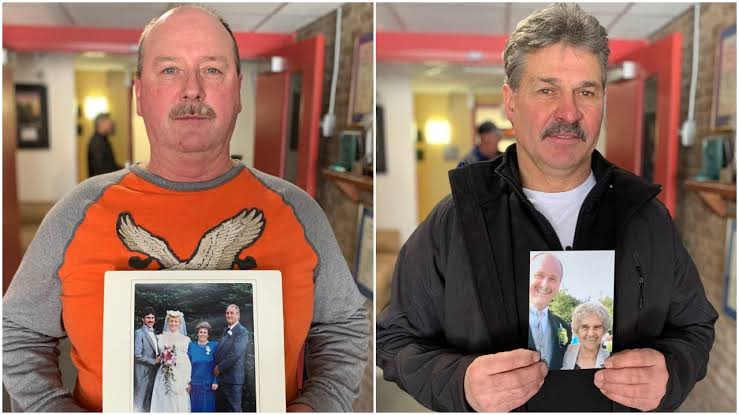
Kyle Bylin and Jeremy Morrison are the two men at the center of the case. Both were born in Grafton, North Dakota, in 1988.
The lawsuit says they spent their childhoods and much of their adult lives without knowing that they had allegedly been switched.
The unusual part of their story is that each man appears to have been raised by the biological family of the other.
Jeremy was raised by Keith Bylin and Evelyn Newton. Kyle was raised by Terry Morrison and Elizabeth O’Toole.
The names people knew them by therefore became another complicated part of discovering what happened.
Both men are now adults with established lives, memories, and family relationships. Learning about their biological connections did not erase the bonds they had formed with the people who raised them.
Instead, it created an additional family structure that both men and their relatives have had to understand.
How Were Kyle Bylin and Jeremy Morrison Switched at Birth?
Exactly how the alleged switch happened remains one of the biggest unanswered questions.
The families say both boys were born at Unity Medical Center on the same day. According to the complaint, they were the only babies delivered there that day.
At some point before discharge, the lawsuit alleges, each infant was given to the other child’s biological parents.
There is no publicly established explanation showing precisely when or why the babies were mixed up.
That uncertainty matters because the births occurred in 1988. Medical records that could have provided more information reportedly no longer exist, and relevant employees from that period are not available to explain what happened.
The plaintiffs argue that the circumstances point toward a mistake while the infants were under hospital control.
One especially important item is a hospital identification bracelet that Bylin says remains in his possession. He says the bracelet carries the identity of the other child.
The bracelet may become important evidence as the case develops, although a court must ultimately decide how much weight to give each piece of evidence.
How Did the Families Discover the Birth Switch?
The alleged mistake remained hidden for more than 36 years.
There was no hospital investigation shortly after the births that alerted the families. Instead, modern DNA technology started the chain of events that eventually connected them.
At-Home DNA Testing and the Discovery
The discovery began when Kyle Bylin received an at-home DNA test through a Christmas gift exchange.
What started as an ordinary consumer genealogy test produced an unexpected result. The DNA information connected Bylin to a woman identified as his biological aunt.
That connection did not fit the family history he had always known.
The woman’s nephew was Jeremy Morrison. Morrison later took a DNA test of his own.
The results supported what initially seemed almost impossible: Bylin and Morrison had apparently grown up with each other’s biological families.
Morrison has also described seeing a photograph of Bylin’s brother and noticing a strong physical resemblance. That added another personal clue to the DNA evidence.
Evidence That Confirmed the Birth Mix-Up
DNA evidence provides the strongest scientific support for the families’ belief that a switch occurred.
The fact that both men were born at the same hospital on the same date also creates an important connection.
According to the lawsuit, they were the only two babies born at Unity Medical Center that day.
The old hospital identification bracelet may provide another link between the alleged switch and the hospital stay.
Together, the DNA findings, birth information, family connections, and identification evidence form the basis of the families’ claims.
Why Are the Families Suing Unity Medical Center?
The families argue that a hospital has a basic responsibility to identify newborns correctly and make sure each baby leaves with the correct family.
They claim Unity Medical Center failed to meet that responsibility in 1988.
According to the complaint, the alleged mistake changed the course of several people’s lives.
The issue goes far beyond using the wrong name on paperwork. The men say they lost decades of opportunities to know their biological parents and siblings as biological relatives.
Their parents also say they lost the chance to raise their biological sons.
The lawsuit therefore seeks accountability for the emotional and family consequences connected to the alleged switch.
Switched At Birth Lawsuit Claims Against the Hospital
The legal dispute involves questions about negligence, the hospital’s duty toward newborn patients, and emotional injuries suffered after the discovery.
The exact legal treatment of these claims will depend on North Dakota law and future court decisions.
Medical Malpractice
A medical malpractice claim normally argues that a health care provider failed to meet an accepted professional standard of care.
A switched-at-birth case can raise questions about whether identifying and releasing newborns falls under medical malpractice rules or ordinary negligence rules.
That distinction can become important because different legal rules and filing deadlines may apply.
Courts in other states have considered similar questions, but North Dakota courts must apply the law relevant to this case.
Hospital Negligence
Negligence is one of the central ideas behind the lawsuit.
Hospitals caring for newborns have procedures designed to prevent identification mistakes. Parents rely heavily on hospital employees to maintain those safeguards.
The plaintiffs allege that the boys could not have ended up with the wrong families without a failure somewhere in the process.
Unity Medical Center disputes responsibility.
Determining negligence may therefore require the court to examine available evidence about custody, identification procedures, discharge practices, and what can reasonably be proven after almost four decades.
Also Read: Mary Ruth Organics Lawsuit
Emotional Distress
Physical injury is not the main harm alleged in this case.
Instead, much of the reported damage involves emotional suffering.
Imagine discovering in adulthood that the parents who raised you are not your biological parents and that another person grew up with your birth family.
That discovery can raise difficult questions about identity, childhood experiences, missed relationships, and belonging.
The parents face a similar emotional issue. They spent decades believing they had raised their biological children before learning otherwise.
The plaintiffs say these circumstances caused serious and lasting emotional harm.
Alleged Deceit and Failure of Duty
The lawsuit also raises broader questions about whether the hospital fulfilled its responsibility to protect and correctly identify newborn patients.
The plaintiffs must establish the legal elements required for their claims rather than simply prove that a switch occurred.
That difference is important.
Even if DNA establishes that the men grew up with the wrong biological families, the court must separately consider who legally caused the switch and whether the defendant can be held responsible.
What Has Unity Medical Center Said About the Lawsuit?
Unity Medical Center does not agree with the families’ claims about its responsibility.
The hospital has acknowledged that Bylin and Morrison were born at its facility on the same day and apparently became separated from their biological parents.
However, acknowledging that a switch occurred is different from admitting legal responsibility for causing it.
Hospital’s Response to the Allegations
Unity Medical Center has said there is no evidence showing that its employees caused the switch.
That position creates one of the central disputes in the case.
The plaintiffs point to the circumstances surrounding the births and hospital custody. The hospital points to the lack of surviving evidence showing exactly what happened.
A judge or jury may eventually need to determine whether the available evidence is strong enough to establish responsibility.
Missing Medical and Staffing Records
Time creates a major problem for both sides.
Nearly four decades have passed since the births.
Relevant hospital records reportedly no longer exist. Employees who worked during the deliveries are also unavailable to provide direct accounts of the events.
Without complete records, reconstructing a short period from January 1988 becomes difficult.
The lack of documentation does not automatically prove or disprove negligence. It does, however, make the evidence question more complicated.
Why the Hospital Denies Responsibility
The hospital’s position centers on proof.
The fact that two babies were switched does not automatically establish which person made the mistake, where it happened, or whether the current hospital entity has legal responsibility.
The families argue that the circumstances leave the hospital as the logical location where the error occurred.
Those competing positions will likely play an important role if the lawsuit moves further through litigation.
Switched At Birth Lawsuit Timeline
Understanding the timeline helps explain why this case has attracted so much attention.
Births at the Hospital in 1988
Kyle Bylin and Jeremy Morrison were born at Unity Medical Center in Grafton, North Dakota, on January 26, 1988.
The lawsuit says they were the only babies born at the hospital that day.
The families allege the newborns were mixed up before leaving the hospital and each went home with the other’s biological parents.
DNA Discovery Decades Later
More than three decades passed without the families knowing about the alleged error.
An at-home DNA test eventually connected Bylin to biological relatives he did not expect to find.
Further DNA testing involving Morrison helped establish the biological connections between the two families.
Attempts to Resolve the Dispute
Reports surrounding the litigation indicate that efforts were made to address the dispute before a lawsuit was filed.
Those efforts did not produce a publicly announced resolution.
Pre-lawsuit discussions are common in civil disputes because parties may attempt to reach an agreement without lengthy litigation.
Filing of the Lawsuit in 2026
The families eventually turned to the courts.
The complaint was filed on July 7, 2026, in Walsh County District Court in North Dakota.
The filing brought national attention to a family mystery that had remained unknown for decades.
Current Status of the Case
As of August 2026, the case remains an active and relatively new legal dispute.
There has been no publicly reported final judgment establishing that Unity Medical Center is legally responsible.
There is also no confirmed final settlement resolving all claims.
Readers should therefore be careful with headlines or social media posts suggesting that damages have already been awarded.
What Evidence Could Be Important in the Lawsuit?
Evidence will be particularly important because the alleged incident happened so long ago.
DNA Test Results
DNA results are central to establishing the biological relationships.
Modern genetic testing can show that the families people believed were biologically theirs do not match their actual genetic relationships.
DNA can strongly support the conclusion that a switch occurred.
However, genetic testing alone may not answer every legal question about exactly how the switch happened or who bears responsibility.
Hospital Identification Bracelet
Bylin reportedly kept an identification bracelet from the hospital.
He says the bracelet incorrectly identified him as the other baby.
If authenticated and admitted as evidence, the bracelet could provide an important physical connection to what happened during the hospital stay.
The parties may still disagree about what conclusions can legally be drawn from it.
Birth and Medical Records
Historical records could normally provide valuable information about staff, nursery procedures, discharge times, identification systems, and the movements of newborns.
The major problem is that important hospital records from 1988 reportedly no longer exist.
Birth records and other documents outside the hospital may still help establish dates, identities, and family connections.
Testimony From Family Members
Parents and other relatives can describe what they remember from the births and what happened after the DNA discovery.
Their testimony may also help explain the emotional impact.
However, memories from almost four decades ago naturally have limitations.
For that reason, physical documents and scientific DNA evidence could carry special importance.
How Has the Birth Switch Affected Both Families?
The emotional consequences are among the most difficult parts of the story.
No amount of DNA information can recreate decades that have already passed.
Emotional Impact on the Two Men
Both men had established identities long before learning about the alleged switch.
The discovery forced them to reconsider basic facts they had believed throughout childhood and adulthood.
Questions such as “Who are my parents?” and “Where do I come from?” suddenly had different answers.
At the same time, neither man simply stopped viewing the people who raised him as family.
Biological relationships and lived family relationships can exist together, making the situation emotionally complex.
Impact on Their Parents
The parents also experienced a major change in how they understood their lives.
They had raised children, celebrated birthdays, dealt with illnesses, watched milestones, and created decades of memories.
Then DNA testing indicated that their biological sons had grown up somewhere else.
Parents may naturally wonder what life would have looked like if they had received the correct baby.
Those lost possibilities form part of the emotional story behind the case.
Meeting Their Biological Families
The discovery created opportunities for the men to meet biological relatives.
Reports have described these meetings as welcoming but understandably awkward.
People connected genetically can still be strangers when they first meet.
They must create relationships as adults instead of developing them naturally throughout childhood.
That process can bring happiness, grief, curiosity, and discomfort at the same time.
Questions About Identity and Lost Family Time
One of the hardest losses to measure is time.
A person can meet a biological parent today, but that does not restore childhood birthdays, school events, holidays, graduations, and ordinary family moments.
The same applies to siblings.
Finding a biological brother or sister as an adult can create an important new relationship, but it cannot reproduce decades of growing up together.
These intangible losses help explain why emotional damages play such an important role in switched-at-birth litigation.
What Compensation Are the Families Seeking?
The plaintiffs are seeking monetary damages connected to the alleged harm they experienced.
Public reports have not established a final amount that the court has awarded because no final judgment has been reported.
Damages in cases involving emotional harm can be difficult to calculate.
There is no simple price for losing the chance to grow up with biological parents or discovering that a major part of one’s identity was based on an error.
A court may consider the nature of the emotional injury, the strength of the evidence, applicable state law, and the legal claims that survive.
Legal fees and other recoverable costs may also become relevant depending on the claims and outcome.
Any specific compensation figure circulating online should therefore be treated carefully unless it comes from an actual court order or verified settlement.
Has the Switched At Birth Lawsuit Reached a Settlement?
As of August 2026, there is no publicly confirmed settlement resolving the case.
This point is important because people searching for the Switched At Birth Lawsuit may encounter searches for “settlement amount” or “payout.”
A settlement and a lawsuit are not the same thing.
The families reportedly attempted to resolve the matter before filing their complaint, but those efforts did not produce an agreement.
The July 2026 filing moved the dispute into formal litigation.
A settlement could still happen later. Civil lawsuits often end through negotiated agreements before trial.
However, until the parties or court confirm such an agreement, readers should not assume that a settlement exists.
Can a Hospital Be Sued for Switching Babies at Birth?
Yes, families can bring legal claims against hospitals when they believe negligence caused babies to be switched.
Whether they ultimately win depends on the facts and law of each case.
A plaintiff generally needs to establish that the defendant owed a duty, failed to meet that duty, and caused legally recognized harm.
Hospitals clearly have important responsibilities when caring for newborns.
Correct patient identification is essential because newborns cannot identify themselves or explain who their parents are.
A baby mix-up can potentially support claims involving negligence, emotional distress, malpractice, or other legal theories.
However, state laws vary.
The age of the case, available evidence, statute of limitations, type of injury, and identity of the responsible organization can all affect whether a claim succeeds.
Statute of Limitations in Switched-at-Birth Cases
The statute of limitations may become one of the most complicated legal questions in cases discovered decades later.
Normally, civil claims must be filed within a set period.
The exact deadline depends on the state and type of claim.
That creates an obvious problem in switched-at-birth cases. A person cannot easily sue over an event they have no reason to know happened.
Some legal disputes therefore focus on when the injury occurred and when the plaintiff discovered, or reasonably could have discovered, the facts.
A recent New York switched-at-birth case shows how complicated this issue can become.
Kevin McMahon alleged that he was switched with another baby at Jamaica Hospital in 1960. DNA testing decades later exposed the apparent mistake.
In March 2026, a New York court dismissed his medical malpractice claim as time-barred but allowed his negligence-based emotional distress claim to continue.
The court reasoned that factual questions remained concerning the emotional harm that arose when McMahon learned the truth.
That New York decision does not control the North Dakota case, but it shows why statutes of limitations can become central in old switched-at-birth claims.
Other Switched At Birth Lawsuits in the United States
The North Dakota case is unusual, but it is not the only American lawsuit involving people who say they discovered a birth switch decades later.
Consumer DNA services have made these cases easier to uncover.
Oklahoma Switched-at-Birth Lawsuit
Tina Ennis and Jill Lopez learned through DNA evidence that they had apparently been switched at birth in Oklahoma in 1964.
The women sued Duncan Regional Hospital decades later.
Their claims included allegations related to negligence and emotional distress.
The discovery had painful consequences because some biological family members had already died before the truth became known.
That meant opportunities for certain biological relationships were permanently lost.
New York Switched-at-Birth Case
Kevin McMahon’s case involves an alleged switch at Jamaica Hospital in New York in May 1960.
McMahon and Ross McMahon were born within roughly two hours of each other and shared the same last name despite coming from unrelated families.
DNA testing decades later indicated that the babies had gone home with the wrong families.
The lawsuit raised both medical malpractice and negligence issues.
In 2026, a New York court dismissed the malpractice portion on limitations grounds while allowing the negligence claim tied to emotional distress to move forward.
The ruling is particularly important because it discusses how courts may approach emotional injuries discovered many years after an alleged newborn identification error.
California Switched-at-Birth Case
California has also seen litigation involving an alleged hospital switch dating back to 1960.
Violet Marquez and Elizabeth Vera were born only minutes apart at a Ventura County hospital.
Decades later, DNA testing reportedly connected Marquez to the Vera family.
Further genetic testing involving Vera’s children supported the belief that the women had been switched.
The families pursued claims including medical malpractice, emotional distress, breach of contract, and fraudulent concealment.
Like other cases, the California dispute shows how consumer genetics can uncover events that traditional hospital records failed to reveal.
Other Notable Baby-Switching Cases
Other lawsuits have emerged in states including West Virginia and Texas.
Although the facts differ, many cases share several patterns.
The alleged switches occurred decades ago, the people involved grew up without knowing the truth, and DNA testing eventually exposed unexpected biological relationships.
They also show why these cases can be legally difficult.
The biological truth may be scientifically clear while responsibility for an event from decades earlier remains harder to prove.
How Common Are Babies Being Switched at Birth?
Baby switching appears to be very rare, particularly when discussing cases in which children actually leave a hospital with the wrong families.
Temporary newborn identification errors can occur without resulting in permanent switches.
Modern hospitals use several layers of identification designed to catch errors before discharge.
For this reason, readers should be careful with dramatic statistics found online.
A number describing identification mistakes is not necessarily a number describing babies permanently sent home with the wrong parents.
Confirmed long-term switches are unusual enough that individual cases often attract national or international news attention.
Older hospital systems relied more heavily on manual identification methods.
Modern technology adds more safeguards, although no human system can guarantee that errors will never happen.
How Modern Hospitals Prevent Babies From Being Switched
Newborn identification has changed considerably since the 1960s and 1980s.
Hospitals today can combine physical identification, electronic systems, staff checks, medical records, and standardized procedures.
Identification Bands
Identification bands remain one of the simplest protections.
A newborn typically receives identifying information that connects the child to the mother and medical record.
Staff can verify those identifiers before procedures, transfers, feeding, discharge, and other important events.
Matching systems reduce reliance on memory or visual recognition.
Newborns can look similar, so appearance alone is never a safe identification method.
Electronic Tracking Systems
Some hospitals use electronic security tags or radio-frequency identification technology.
These systems can link a newborn to a parent and track movement within designated hospital areas.
Alerts may activate when a baby moves outside an approved area or when identification information does not match.
Technology adds another layer of protection, but staff still need to follow proper procedures.
Parent and Newborn Verification Procedures
Verification should happen repeatedly rather than only once after birth.
Hospitals can check identifiers when a newborn leaves or returns to a nursery, receives treatment, enters the mother’s room, or leaves the facility.
Modern patient-safety standards also emphasize reliable identification practices for newborn patients.
Using more than one identifier reduces the chance that a single labeling or communication mistake will affect the wrong child.
Staff training, clear documentation, secure nursery access, and careful discharge checks all strengthen the system.
Role of DNA Testing in Switched-at-Birth Cases
DNA testing has transformed how people investigate biological relationships.
In the past, a family might notice differences in appearance or question a blood type but never receive a clear answer.
Consumer genetic databases changed that.
A person can submit a sample and discover relatives they never knew existed.
Unexpected parent, sibling, aunt, uncle, or cousin matches can expose adoption, donor conception, mistaken paternity, or possible hospital errors.
In the North Dakota case, DNA testing provided the clue that connected two families whose lives had crossed at the same hospital decades earlier.
DNA evidence is particularly powerful for establishing biological relationships.
Still, a legal case requires more than establishing genetics.
A court may also need evidence connecting the switch to a particular defendant and showing that the defendant breached a legal duty.
That distinction explains why hospital bracelets, birth documents, historical records, testimony, and hospital procedures can remain important even when DNA evidence is strong.
What Could Happen Next in the Switched At Birth Lawsuit?
Several outcomes remain possible.
The case could continue through discovery, where each side requests documents, testimony, expert opinions, and other evidence.
The hospital may challenge some or all of the legal claims.
Questions about filing deadlines and the proper legal theory could also become important because the alleged event occurred in 1988.
Experts may examine historical hospital practices and explain what newborn identification procedures were expected at the time.
The parties could also negotiate a settlement.
Settlement would allow them to resolve the dispute without waiting for a full trial and verdict.
If no agreement is reached and the claims survive legal challenges, the case could eventually reach a jury.
A jury could then consider whether the plaintiffs proved liability and, if so, what damages are appropriate.
It is too early to predict which outcome will occur.
Frequently Asked Questions About the Switched At Birth Lawsuit
Who was switched at birth in the North Dakota lawsuit?
Kyle Bylin and Jeremy Morrison say they were switched as newborns at Unity Medical Center in Grafton, North Dakota. DNA testing decades later showed unexpected biological relationships between their families.
When were Kyle Bylin and Jeremy Morrison born?
According to the lawsuit and major news reports, both men were born on January 26, 1988. They were reportedly the only babies born at Unity Medical Center that day.
How long did they live without knowing about the switch?
The alleged switch remained undiscovered for more than 36 years. Both men had already built adult lives before DNA testing exposed the biological connections.
How did they discover they were switched?
An at-home DNA test started the discovery. Unexpected genealogy matches led to additional investigation and testing that connected each man biologically to the other’s family.
Which hospital is being sued?
The lawsuit names Christian Unity Hospital Corporation, doing business as Unity Medical Center in Grafton, North Dakota.
When was the lawsuit filed?
The complaint was filed in Walsh County District Court on July 7, 2026.
Does Unity Medical Center admit it switched the babies?
The hospital acknowledges that both men were born there on the same day and apparently became separated from their biological parents. However, it disputes that available evidence establishes hospital staff caused the switch.
Is there physical evidence from the hospital?
Bylin says he still has a hospital identification bracelet that incorrectly identifies him as the other child. The importance and legal weight of that item will depend on the litigation.
Are the original hospital records available?
Relevant hospital records from 1988 reportedly no longer exist. This makes reconstructing exactly what happened more difficult for the parties.
Did the two men meet their biological families?
The discovery led both families to make contact and begin forming new biological family relationships. Reports describe the process as emotional and sometimes awkward because everyone had already spent decades in established family roles.
Did the families receive a settlement?
There is no publicly confirmed final settlement as of August 2026. The case remains a developing legal matter, so claims about a specific payout should be treated cautiously.
How much money are the families seeking?
The families seek financial compensation for alleged damages, particularly emotional and family-related harm. No final damages award has been reported.
Can DNA testing prove babies were switched?
DNA testing can provide powerful evidence showing biological relationships. However, proving legal responsibility may require additional evidence about where the switch happened and who had custody of the infants.
Can someone sue decades after being switched at birth?
Potentially, but statutes of limitations make these cases complicated. The rules vary by state and may depend on the type of claim and when the person discovered the injury.
Have similar cases happened before?
Yes. Switched-at-birth lawsuits have been reported in New York, Oklahoma, California, Texas, West Virginia, and other places. Several were discovered through modern DNA testing.
Conclusion
The story of Kyle Bylin and Jeremy Morrison shows how one alleged hospital mistake can affect generations of a family. What began with an ordinary DNA test eventually raised questions about identity, parenthood, lost time, hospital responsibility, and legal accountability.
The evidence reported so far strongly supports the families’ conclusion that the men were raised by different biological families than expected, but the court must still decide the disputed questions of legal responsibility. Unity Medical Center denies that available evidence proves its staff caused the switch.
For now, there is no confirmed final settlement or judgment. The Switched At Birth Lawsuit remains a developing case, and future court filings may provide clearer answers about liability, compensation, and how the legal system handles a life-changing discovery made almost four decades after birth.




One Comment