Mychart Lawsuit: Latest Settlement Updates, Eligibility, and Payment Guide
The Mychart Lawsuit refers to a series of class action lawsuits filed against healthcare providers that used the MyChart patient portal. The lawsuits claim that some providers allowed tracking technologies, such as Meta Pixel and Google Analytics, to collect patient information while users interacted with online healthcare portals.
Patients argue that this information was shared without their knowledge or proper consent. The lawsuits claim this violated patient privacy rights and various federal and state privacy laws.
It is important to understand that these lawsuits are generally not directed at Epic Systems, the company that developed MyChart. Instead, they focus on hospitals, clinics, and healthcare organizations that allegedly configured or used tracking technologies on their websites and patient portals.
As more patients became aware of these practices, additional lawsuits were filed across the United States against different healthcare systems.
Why Was the Mychart Lawsuit Filed?
The main reason behind the Mychart Lawsuit is the alleged sharing of sensitive patient information with advertising and analytics companies.
According to court filings, some healthcare websites installed online tracking tools to understand how visitors used their websites. These tools are common across many industries for marketing and website improvement.
However, patients claim that healthcare information deserves a much higher level of privacy than ordinary website data.
The lawsuits argue that tracking technologies may have collected information such as:
- Patient portal activity
- Appointment requests
- Search history on healthcare websites
- Medical specialties viewed
- Doctor names searched
- Login activity
- Device identifiers
- IP addresses
- Browser information
Depending on how a website was configured, plaintiffs claim even more sensitive information could have been transmitted.
The lawsuits state that patients were generally unaware that these tracking technologies were operating behind the scenes.
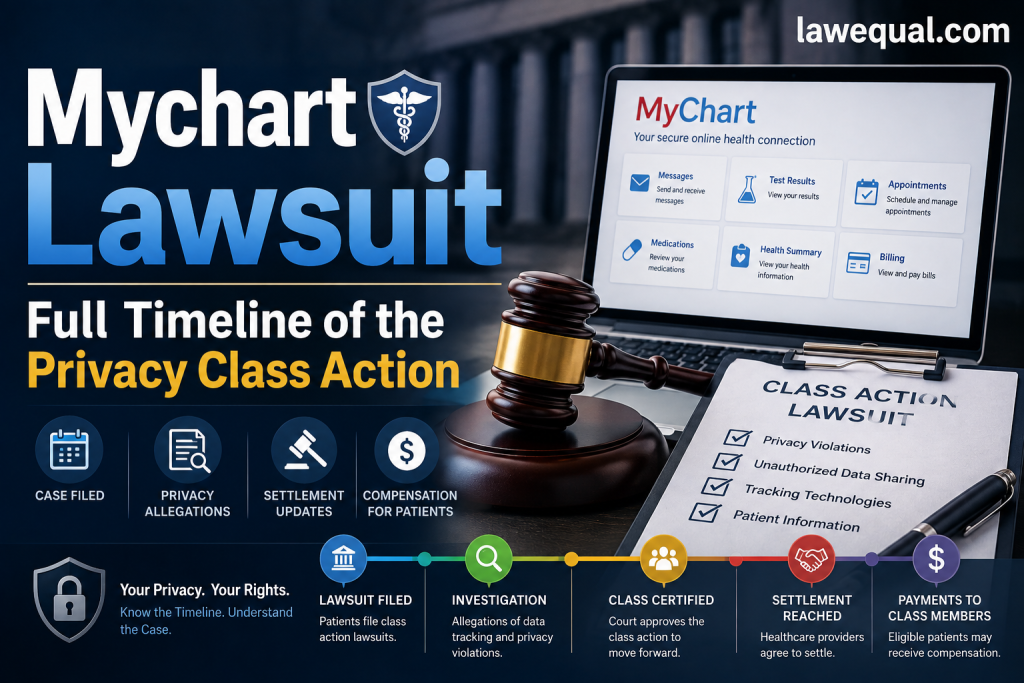
How MyChart Patient Data Was Allegedly Shared
Many lawsuits focus on how online tracking technologies collected information automatically whenever users visited healthcare websites.
When patients logged into a portal, scheduled appointments, searched for physicians, or viewed healthcare services, tracking pixels and analytics scripts could record certain actions.
Those actions might then be transmitted to third-party companies for advertising or analytics purposes.
Plaintiffs argue that even if medical diagnoses were not directly shared, combinations of information could still reveal sensitive health interests.
For example, searching for:
- Cancer treatment
- Pregnancy care
- Mental health services
- Cardiology
- Diabetes specialists
could indirectly disclose private health concerns.
Healthcare privacy advocates argue that this type of information should remain confidential.
Role of Tracking Pixels and Third-Party Technologies
A major topic in the Mychart Lawsuit is the use of tracking pixels.
Tracking pixels are tiny pieces of computer code placed on websites. They help website owners understand visitor behavior.
Common tracking technologies include:
- Meta Pixel
- Google Analytics
- Google Tag Manager
- Advertising cookies
- Marketing scripts
- Conversion tracking tools
These technologies are widely used in online marketing.
In healthcare, however, they have raised serious privacy questions.
If tracking tools collect information connected to patient activity, plaintiffs argue that healthcare providers must carefully protect that information and follow privacy regulations.
Several lawsuits claim that some healthcare organizations failed to properly manage these technologies.
Also Read: Kim Muratori Mercedes-Benz Lawsuit
Healthcare Systems Named in MyChart Lawsuits
Numerous healthcare providers have faced lawsuits involving MyChart portals or similar patient portals.
Examples include large:
- Hospital networks
- Regional healthcare systems
- Academic medical centers
- Medical groups
- Non-profit hospitals
Different lawsuits involve different facts and allegations.
Some organizations chose to defend the claims in court.
Others reached settlements without admitting wrongdoing.
Several healthcare systems also removed or modified tracking technologies after privacy concerns became public.
Because each lawsuit is different, settlement amounts, eligibility rules, and legal outcomes vary from one healthcare organization to another.
Key Allegations in the Mychart Lawsuit
Although every case is unique, many complaints contain similar allegations.
Unauthorized Sharing of Patient Information
Plaintiffs argue that patient information was shared without proper authorization.
They believe healthcare organizations should have obtained clearer consent before using online tracking technologies.
Violation of Privacy Laws
Several lawsuits claim violations of:
- Federal privacy protections
- State consumer privacy laws
- Medical confidentiality laws
- Electronic communications laws
The exact legal claims differ depending on the state where the lawsuit was filed.
Failure to Protect Sensitive Data
Patients also argue that healthcare organizations should have implemented stronger safeguards before placing marketing tools on patient-facing websites.
Healthcare providers have a duty to protect confidential medical information.
The lawsuits claim this responsibility extends to online patient portals.
Lack of Transparency
Another common allegation is that privacy notices did not clearly explain how patient information might be collected or shared.
Some plaintiffs argue they would have acted differently had they known how tracking technologies worked.
Mychart Lawsuit Settlement Updates
The Mychart Lawsuit has resulted in multiple settlements involving different healthcare systems across the United States. Since the cases involve separate hospitals and medical organizations, there is no single nationwide MyChart settlement.
Many healthcare providers agreed to resolve privacy claims by creating settlement funds for eligible patients. In most cases, the organizations denied any wrongdoing but chose to settle to avoid lengthy litigation and the costs of continuing the legal process.
Settlement agreements often include more than cash payments. Many healthcare systems also agreed to improve privacy practices, review the use of online tracking technologies, and strengthen security measures to better protect patient information.
As new lawsuits continue to be filed, additional settlements may be announced in the future. Patients who believe they were affected should watch for official settlement notices related to their healthcare provider.
Mychart Lawsuit Settlement Updates by Healthcare System
Because there are multiple MyChart-related cases, settlement details differ from one provider to another.
Some healthcare systems have announced multimillion-dollar settlements, while others are still defending the lawsuits in court. The amount available to each patient depends on factors such as:
- The size of the settlement fund
- The number of valid claims submitted
- Attorney fees and court-approved expenses
- Administrative costs
- The specific terms of the settlement agreement
Some settlements also provide credit monitoring or identity protection services instead of, or in addition to, cash compensation.
Patients should remember that receiving a settlement notice does not automatically guarantee payment. Eligibility requirements must still be met.
Who Is Eligible for the MyChart Settlement?
Eligibility depends on the specific healthcare provider involved in the lawsuit.
Generally, settlement classes include patients who:
- Used a participating healthcare provider’s MyChart portal during the specified period.
- Logged into their online patient account.
- Scheduled appointments through the patient portal.
- Viewed medical records or test results online.
- Sent messages to healthcare providers using MyChart.
- Used other online patient portal features covered by the settlement.
Each settlement defines its own class period. Some may cover several years, while others apply only to a shorter timeframe.
Patients who never used the affected MyChart portal are usually not included in that particular settlement.
If a person received an official settlement notice by mail or email, that is often a strong indication that they may be part of the settlement class. However, receiving a notice does not always guarantee payment if additional requirements apply.
How Much Money Could Eligible Users Receive?
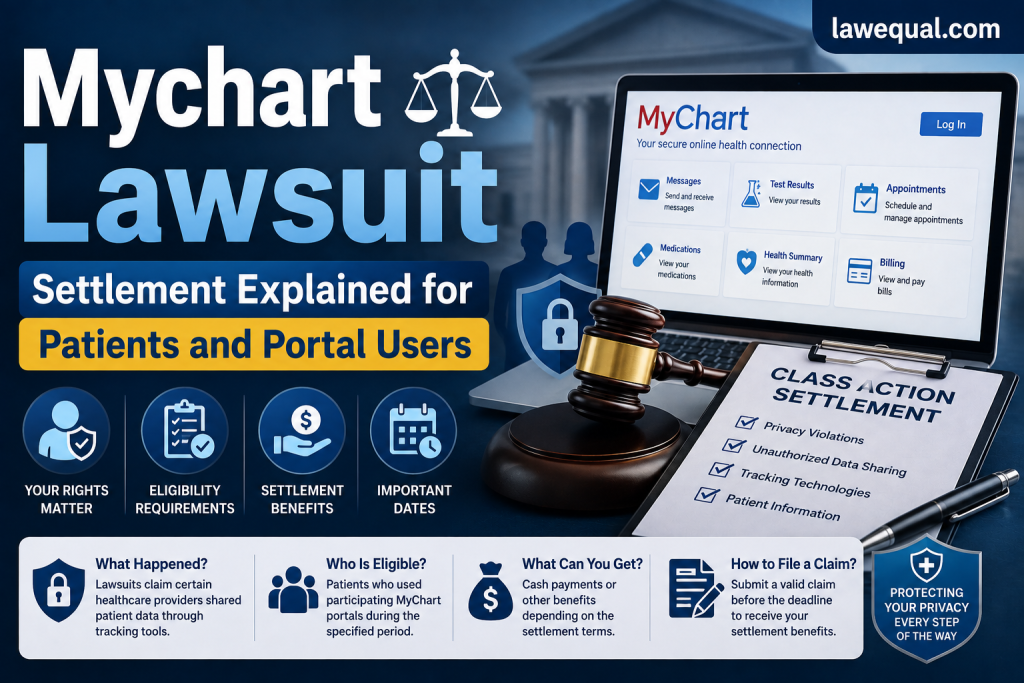
One of the most common questions about the Mychart Lawsuit is how much compensation patients may receive.
There is no fixed payment amount for every settlement.
Actual payments vary depending on several factors, including:
- The total settlement fund.
- The number of approved claims.
- Court-approved deductions.
- Whether payments are distributed equally or based on individual circumstances.
In some cases, eligible class members receive modest cash payments. In others, patients may receive larger payments if the settlement agreement allows reimbursement for documented losses related to the alleged privacy incident.
Some settlements also provide non-cash benefits, such as:
- Identity theft protection.
- Credit monitoring services.
- Fraud assistance.
- Privacy protection resources.
The final payment amount is usually calculated only after the claims process has ended and the court grants final approval.
Factors That Can Affect Settlement Payments
Several factors influence how much each eligible claimant receives.
Number of Valid Claims
If many people submit valid claims, individual payments may be lower because the settlement fund is divided among more participants.
Settlement Size
Larger settlement funds may result in higher payments, although this depends on the number of eligible class members.
Administrative Costs
Settlement administrators deduct approved expenses before distributing payments.
Attorney Fees
Courts often approve attorney fees separately from the settlement fund or as part of the total settlement amount.
Individual Claims
Some settlements treat every claimant equally, while others provide additional compensation for people who experienced documented financial harm.
How to File a MyChart Settlement Claim
Patients who qualify for a settlement generally need to submit a claim before the deadline.
Although each settlement has different instructions, the overall process is usually similar.
Step 1: Confirm Eligibility
Read the settlement notice carefully.
Check:
- Healthcare provider name.
- Dates covered by the settlement.
- Eligibility requirements.
- Claim deadline.
Step 2: Complete the Claim Form
Many settlements allow online claim submissions.
Others may also provide paper forms that can be mailed.
The form usually requests:
- Name.
- Address.
- Contact information.
- Confirmation that you meet the settlement requirements.
Step 3: Submit Before the Deadline
Claims submitted after the deadline are generally not accepted.
It is important to review the information carefully before sending the form.
Step 4: Wait for Court Approval
Even after submitting a claim, payments are not immediate.
The court must first grant final approval.
Appeals or legal challenges can delay payment for several months.
Step 5: Receive Payment
Once the settlement becomes final, approved claimants receive compensation according to the settlement agreement.
Payments may be sent through:
- Check.
- Electronic payment.
- Direct deposit.
- Digital payment platforms.
The available payment methods depend on the individual settlement.
Important Deadlines and Key Dates
Every Mychart Lawsuit settlement has its own schedule.
Important dates often include:
- Notice mailing date.
- Claim filing deadline.
- Exclusion deadline.
- Objection deadline.
- Final approval hearing.
- Expected payment distribution.
Missing a claim deadline may prevent an eligible patient from receiving compensation.
Patients should also keep copies of any confirmation emails or claim receipts after submitting their forms.
If the court changes the schedule, settlement administrators usually update the official settlement website with the new dates.
Why Some Cases Take Years to Finish
Many people wonder why class action settlements move slowly.
Several legal steps must occur before payments can be issued.
These include:
- Filing the lawsuit.
- Discovery and evidence collection.
- Settlement negotiations.
- Preliminary court approval.
- Notice to class members.
- Claim submission period.
- Final approval hearing.
- Appeals, if any.
- Payment processing.
Each stage can take several months.
If appeals are filed, the process may continue for a year or longer before payments begin.
Current Status of the Mychart Lawsuit
The current status of the Mychart Lawsuit varies because multiple lawsuits remain active across the country.
Some healthcare providers have already reached settlements, while others continue to defend the allegations in court.
Several organizations have updated their website privacy practices and reviewed how tracking technologies are used on patient portals. These changes aim to reduce future privacy concerns and improve compliance with healthcare privacy requirements.
Legal experts expect additional lawsuits and settlements as courts continue reviewing claims involving patient data, online tracking tools, and healthcare privacy.
Patients should understand that each lawsuit follows its own timeline. A settlement involving one healthcare provider
How the Lawsuit Could Affect MyChart Users
The Mychart Lawsuit has encouraged many patients to pay closer attention to how their personal health information is handled online. While the lawsuits involve specific healthcare providers, they have also increased awareness about digital privacy across the healthcare industry.
Patients may notice updates to privacy notices, cookie policies, and consent forms when using patient portals. Healthcare organizations are becoming more transparent about the technologies they use and the information they collect.
The lawsuits also remind patients that it is important to read privacy policies and understand how online services work. Although patient portals make healthcare more convenient, users should know how their information is protected.
For healthcare providers, these cases highlight the importance of balancing digital innovation with strong privacy safeguards.
What Healthcare Providers Have Changed After the Lawsuits
Following the privacy lawsuits, many healthcare organizations reviewed their websites and patient portals to reduce the risk of unauthorized data sharing.
Some providers removed tracking technologies from pages that handled sensitive patient information. Others updated privacy practices and strengthened internal policies for managing online data.
Common changes include:
- Removing or limiting advertising tracking tools.
- Reviewing website analytics settings.
- Updating privacy notices.
- Improving patient consent procedures.
- Conducting regular privacy and security audits.
- Training employees on data protection.
- Working with cybersecurity experts to identify privacy risks.
These improvements are intended to increase patient trust and reduce the chance of similar privacy concerns in the future.
How to Protect Your Medical Information Online
Although healthcare providers have a responsibility to protect patient information, individuals can also take steps to improve their online security.
Use Strong Passwords
Create a unique password for your MyChart account. Avoid using simple passwords such as your birth date or common words.
A strong password should include uppercase letters, lowercase letters, numbers, and special characters.
Enable Multi-Factor Authentication
If your healthcare provider offers multi-factor authentication (MFA), enable it.
This adds an extra layer of security by requiring a second verification step before someone can access your account.
Keep Your Devices Updated
Install software updates on your phone, tablet, and computer as soon as they become available.
Security updates help protect your devices from newly discovered threats.
Avoid Public Wi-Fi
Do not access your MyChart account over unsecured public Wi-Fi networks unless you are using a trusted virtual private network (VPN).
Public networks may expose your information to security risks.
Monitor Your Account Regularly
Log in to your patient portal from time to time and review your account activity.
Report any unusual activity to your healthcare provider immediately.
Be Careful with Emails
Scammers sometimes send fake emails pretending to come from hospitals or healthcare providers.
Do not click suspicious links or provide login credentials unless you are certain the message is legitimate.
Protect Personal Information
Only share your MyChart login information with trusted individuals when absolutely necessary.
Never post screenshots of your patient portal or medical records on social media.
Frequently Asked Questions
Is the Mychart Lawsuit legitimate?
Yes. Multiple class action lawsuits have been filed against various healthcare providers regarding the alleged use of online tracking technologies on MyChart patient portals and related healthcare websites. However, each case is separate, and not every healthcare organization has been sued.
Is Epic Systems being sued in every MyChart lawsuit?
No. Most MyChart lawsuits focus on healthcare providers that use the MyChart platform rather than Epic Systems, the company that developed the software.
The allegations generally concern how individual healthcare organizations implemented tracking technologies on their own websites and patient portals.
Who qualifies for a MyChart settlement?
Eligibility depends on the specific settlement.
Generally, patients who used a participating healthcare provider’s MyChart portal during the covered period may qualify if they meet the settlement requirements.
Each settlement has its own eligibility rules and claim procedures.
How much money can eligible users receive?
There is no standard payment amount.
Compensation depends on:
- The size of the settlement fund.
- The number of valid claims.
- Court-approved deductions.
- The terms of the settlement agreement.
Some settlements provide cash payments, while others may also offer identity protection services or credit monitoring.
Do I need to submit a claim?
In most settlements, eligible patients must submit a valid claim before the deadline to receive compensation.
Some settlements may automatically include eligible class members, but this depends on the specific case.
Always review the official settlement notice carefully.
Are all MyChart users included?
No.
Only patients who meet the eligibility requirements for a particular healthcare provider’s settlement are included.
Using MyChart at one hospital does not automatically make you eligible for settlements involving another healthcare system.
Will there be more MyChart lawsuits?
It is possible.
As courts continue reviewing privacy claims involving healthcare websites and tracking technologies, additional lawsuits or settlements may be filed against other healthcare organizations.
Final Thoughts
The Mychart Lawsuit has become an important example of how digital privacy issues can affect the healthcare industry. While MyChart remains one of the most widely used patient portals in the United States, the lawsuits focus on how certain healthcare providers allegedly handled patient information through online tracking technologies rather than on the MyChart software itself.
These cases have encouraged hospitals and medical organizations to review their privacy practices, improve website security, and provide greater transparency about how patient information is collected and used. At the same time, patients have become more aware of the importance of protecting their personal health information when using online healthcare services.
If you believe you may be affected by a Mychart Lawsuit settlement, review any notices you receive carefully, confirm your eligibility, and submit your claim before the applicable deadline. Staying informed about settlement updates and understanding your privacy rights can help you make better decisions about your healthcare information in the future.