Costco Rotisserie Chicken Lawsuit: Latest Updates, Claims, and Case Status (2026)
The Costco Rotisserie Chicken Lawsuit has become one of the most talked-about food-related legal cases of 2026. The lawsuits focus on Costco’s famous Kirkland Signature Rotisserie Chicken, a product that has been a customer favorite for years because of its low price and convenience.
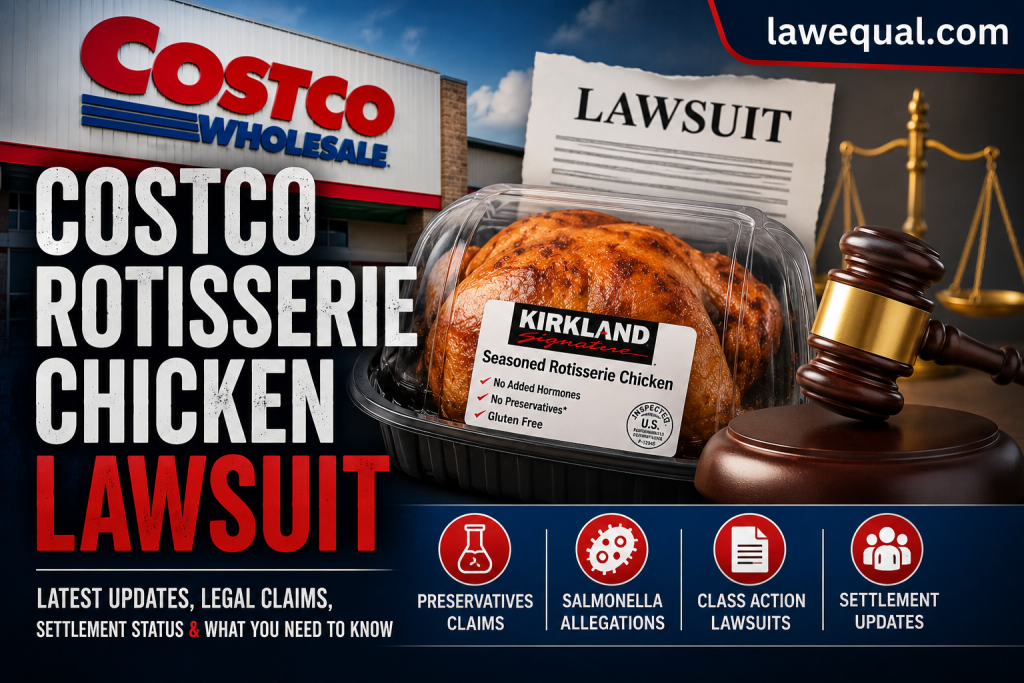
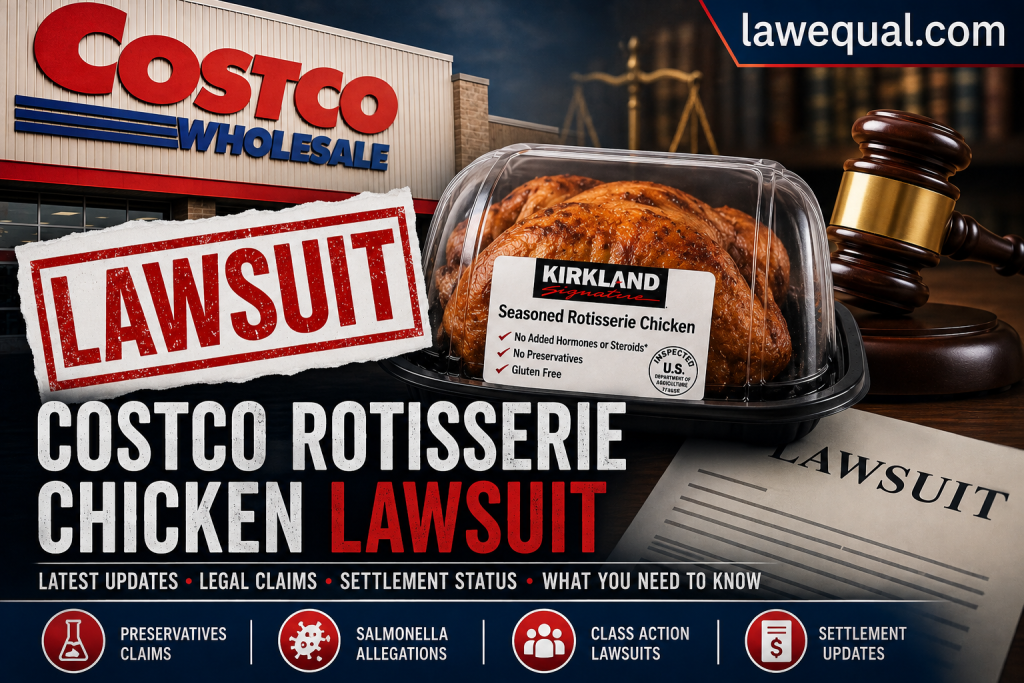
Instead of one lawsuit, Costco is currently facing two separate proposed class action lawsuits. Each case raises different concerns. One lawsuit claims Costco misled shoppers by advertising the chicken as containing “no preservatives.”
The other lawsuit alleges that Costco failed to disclose ongoing salmonella contamination concerns related to its poultry supply.
Although both lawsuits involve the same rotisserie chicken, they are based on different legal arguments and are being handled separately in federal court. As of now, neither case has reached a final decision, and no settlement has been approved.
These legal actions have attracted attention because Costco sells more than 150 million rotisserie chickens every year. The product has become one of the company’s best-known grocery items, making any lawsuit involving it important for both consumers and the retail industry.
Why Is Costco Facing Multiple Rotisserie Chicken Lawsuits?
Many shoppers searched online after hearing about the Costco Rotisserie Chicken Lawsuit, wondering why there are multiple legal cases instead of just one.
The answer is simple. The lawsuits involve two different issues.
The first lawsuit focuses on product labeling and advertising. Customers claim Costco promoted the chicken as containing no preservatives, even though the seasoning includes ingredients such as sodium phosphate and carrageenan. The plaintiffs argue these ingredients act as preservatives or have preservative functions.
The second lawsuit is about food safety. It alleges that Costco’s poultry processing operation has experienced ongoing salmonella contamination problems that were not disclosed to customers before they purchased the product.
Because the claims involve different facts and different legal questions, they were filed as separate proposed class actions.
Here is a quick comparison:
| Lawsuit | Main Issue |
|---|---|
| Preservatives Lawsuit | “No preservatives” advertising claim |
| Salmonella Lawsuit | Alleged contamination risk and consumer disclosure |
Neither lawsuit means Costco has been found guilty of wrongdoing. Both cases are still moving through the court system.
Costco Rotisserie Chicken Preservatives Lawsuit
The Costco Rotisserie Chicken Lawsuit involving preservatives began in January 2026.
Two California consumers filed a proposed class action after purchasing Costco’s Kirkland Signature Seasoned Rotisserie Chicken. They claimed they relied on Costco’s advertising that described the chicken as containing “No Preservatives.”
According to the lawsuit, the chicken’s seasoning actually contains sodium phosphate and carrageenan, ingredients that the plaintiffs believe perform preservative functions.
The lawsuit argues that shoppers paid for a product they believed matched Costco’s advertising but later learned the ingredients listed on the label did not match those expectations.
Costco denies these allegations and says the claims misunderstand how the ingredients are classified under food regulations.
Also Read: Carnival Tequila Lawsuit Verdict
Allegations About the “No Preservatives” Label
The lawsuit centers on Costco’s marketing rather than the chicken itself.
According to court filings, in-store signs and online descriptions promoted the rotisserie chicken using statements such as:
- No preservatives
- No artificial flavors
- No MSG
- Gluten free
The plaintiffs argue that these statements encouraged health-conscious shoppers to purchase the chicken instead of competing products.
They claim they would not have bought the chicken—or would have paid less—if they had known about the disputed ingredients.
The lawsuit also argues that customers generally understand the phrase “no preservatives” to mean the food contains no ingredients that help maintain freshness or extend shelf life.
Sodium Phosphate and Carrageenan Explained
Much of the discussion in the Costco Rotisserie Chicken Lawsuit focuses on two ingredients:
Sodium Phosphate
Sodium phosphate is commonly used in processed meats to help retain moisture during cooking. It also helps improve texture and reduces moisture loss.
Carrageenan
Carrageenan comes from red seaweed. Food manufacturers often use it to improve texture, stabilize ingredients, and create a smoother product.
Both ingredients are legally used in many packaged foods sold in the United States.
The disagreement is whether these ingredients should also be considered preservatives when Costco advertised the chicken as containing no preservatives.
What the Plaintiffs Are Claiming
The consumers bringing the lawsuit make several key arguments.
They claim Costco:
- Misled customers through advertising.
- Violated consumer protection laws.
- Used marketing that influenced buying decisions.
- Charged customers for a product that did not match the advertised description.
The lawsuit seeks class action status so that other customers who purchased the chicken during the relevant period may also be included if the court approves the class.
At this stage, these remain allegations that have not been proven in court.
Costco’s Response to the Labeling Lawsuit
Costco strongly disagrees with the claims.
The company filed a motion asking the court to dismiss the lawsuit, calling it “fatally flawed.” Costco argues that sodium phosphate and carrageenan are used mainly for texture and moisture retention rather than as preservatives under applicable regulations.
Costco also points out that these ingredients were listed on the product label, meaning customers had access to the ingredient information before buying the chicken.
After the lawsuit was filed, Costco removed the “No Preservatives” wording from some in-store displays and online marketing materials. The company said the change was made to keep its messaging consistent, not because it admitted wrongdoing.
The court has not yet issued a final ruling on the case, meaning the lawsuit remains ongoing.
Costco Rotisserie Chicken Salmonella Lawsuit
A second Costco Rotisserie Chicken Lawsuit was filed only weeks after the preservatives case. This lawsuit is different because it focuses on food safety rather than product labeling.
The complaint alleges that Costco failed to inform customers about ongoing salmonella contamination concerns linked to its poultry processing operation in Nebraska. Unlike the preservatives lawsuit, this case does not claim the chicken label was misleading. Instead, it argues that consumers paid for products without knowing about the alleged contamination risks.
The lawsuit was filed in federal court in Seattle in February 2026 by Missouri resident Lisa Taylor. She seeks to represent customers who purchased Costco rotisserie chickens and certain raw chicken products supplied through Costco’s poultry system.
The case is still in its early stages, and the court has not determined whether Costco violated any laws.
Why the Salmonella Allegations Were Filed
The salmonella lawsuit was filed after reports questioned food safety conditions at Costco’s poultry processing system.
According to the complaint, shoppers were not told that Costco’s processing plant had allegedly experienced repeated salmonella-related safety concerns over several years.
The plaintiff argues that if customers had known about these alleged issues, many would have chosen another product or paid less for the chicken.
Importantly, the lawsuit focuses on economic harm, claiming consumers overpaid because important information was not disclosed. It is not based on a nationwide salmonella outbreak linked to Costco’s cooked rotisserie chicken.
Claims About Lincoln Premium Poultry
The lawsuit centers on Lincoln Premium Poultry, Costco’s processing facility in Fremont, Nebraska.
Costco built this plant to gain more control over its chicken supply and to keep the famous $4.99 rotisserie chicken affordable for customers.
The complaint claims the facility experienced ongoing salmonella contamination issues and cites reports analyzing USDA inspection data.
According to the lawsuit, the plant can process more than 100 million chickens each year, making it one of Costco’s most important poultry facilities.
Because of its size, any allegations involving the plant receive significant public attention.
USDA Inspection Data and Food Safety Concerns
The complaint relies heavily on inspection information discussed in a Farm Forward report.
According to the lawsuit, USDA testing found salmonella in more than 9.8% of whole chickens and 15.4% of chicken parts sampled from the facility during certain reporting periods.
The complaint also alleges that the plant repeatedly received the USDA’s lowest food safety performance category over multiple reporting periods.
However, it is important to understand what these claims mean.
Raw chicken naturally carries a risk of bacteria, including salmonella. Food safety agencies recommend handling raw poultry carefully and cooking it to the proper internal temperature.
The lawsuit argues that Costco should have disclosed the alleged contamination issues. Costco has not been found liable, and the allegations remain before the court.
Costco’s Position on the Salmonella Claims
Unlike the preservatives lawsuit, Costco has not publicly provided a detailed legal response to all of the salmonella allegations.
The company continues selling its rotisserie chicken, and there has been no nationwide recall of Costco rotisserie chicken related to this lawsuit.
The case remains pending, and the court will determine whether the plaintiff’s claims can move forward as a class action.
Consumers should remember that filing a lawsuit does not mean the allegations have been proven.
Costco Rotisserie Chicken Lawsuit Timeline
Understanding the timeline makes it easier to follow how the Costco Rotisserie Chicken Lawsuit has developed.
Several important events have taken place within a short period.
January 2026 Preservatives Lawsuit
The first proposed class action was filed in January 2026.
Two California consumers alleged Costco falsely advertised its rotisserie chicken as containing “No Preservatives.”
The lawsuit claims the chicken seasoning contains sodium phosphate and carrageenan, which the plaintiffs believe conflict with that advertising.
Costco later removed the “No Preservatives” wording from certain marketing materials while continuing to deny wrongdoing.
February 2026 Salmonella Class Action
Less than one month later, another proposed class action was filed.
This second lawsuit focused on alleged salmonella contamination risks connected to Costco’s poultry processing facility in Nebraska.
The plaintiff claims Costco should have informed customers about the alleged safety concerns before selling the products.
Recent Court Updates
Both lawsuits remain active.
The preservatives lawsuit has gone through early motions, including Costco’s request to dismiss the case.
The salmonella lawsuit is also moving through the federal court system.
Neither case has reached trial, and neither has resulted in a settlement or final judgment.
What Could Happen Next
Several outcomes remain possible.
The courts could:
- Dismiss one or both lawsuits.
- Allow the cases to continue toward trial.
- Certify one or both cases as class actions.
- Approve a future settlement if both sides reach an agreement.
Because litigation often takes months or even years, shoppers should expect updates to appear gradually.
Who Filed the Costco Rotisserie Chicken Lawsuit?
The two lawsuits involve different plaintiffs.
The preservatives lawsuit was filed by Bianca Johnston and Anastasia Chernov, who purchased Costco rotisserie chicken in California.
The salmonella lawsuit was filed by Lisa Taylor, a Missouri resident, in federal court in Seattle.
Although all three consumers purchased Costco chicken products, they raise different legal claims against the company.
Each plaintiff seeks to represent a larger group of customers through the class action process.
What Are the Main Legal Claims Against Costco?
Across both cases, the legal arguments focus on consumer protection rather than personal injury.
The plaintiffs claim Costco:
- Misled customers through product advertising.
- Failed to disclose important information.
- Violated state consumer protection laws.
- Caused customers to overpay for chicken products.
- Breached implied promises about the products sold.
Costco disputes these allegations.
The company maintains that its ingredients comply with food regulations and that the legal claims do not accurately reflect how the product is marketed or regulated.
At this stage, the court has not ruled in favor of either side.
Can Costco Members Receive a Settlement?
Many people searching for the Costco Rotisserie Chicken Lawsuit want to know whether they can receive money from a settlement.
The short answer is not yet.
As of now, there is no approved settlement, no payment program, and no official claims process for either lawsuit. Both proposed class actions are still moving through the court system, and the judges have not ruled on the merits of the cases.
Customers do not need to submit any forms at this time because no class has been certified and no settlement administrator has been appointed.
Is There a Settlement Yet?
No.
Despite many articles and social media posts discussing the lawsuits, there is currently no Costco Rotisserie Chicken settlement.
This means:
- No settlement fund has been created.
- No payment amounts have been announced.
- No claim deadline exists.
- No official claim website is available.
If a settlement is reached in the future, the court will usually require official notices explaining who qualifies and how claims can be filed.
Until then, shoppers should be cautious of websites claiming they can already help people receive compensation.
Who Could Qualify if the Case Is Certified?
If either lawsuit is eventually certified as a class action, eligibility will depend on the judge’s order and the settlement terms.
Although nothing has been finalized, potential class members could include customers who:
- Purchased Costco rotisserie chicken during the covered period.
- Meet the eligibility requirements established by the court.
- Purchased the product in locations included in the lawsuit.
- Follow any future claims process before the deadline.
Some class action settlements require proof of purchase, while others accept claims without receipts under certain conditions.
The exact rules will only become available if the lawsuits move beyond the current stage.
Expected Timeline for Any Future Claims
Class action lawsuits usually take time.
Even after a lawsuit is filed, several legal steps must happen before customers can receive compensation.
A typical timeline may include:
- Court hearings.
- Motions from both sides.
- Discovery and evidence gathering.
- Class certification decision.
- Settlement negotiations or trial.
- Court approval of any settlement.
- Claim filing period.
- Distribution of payments.
Because both Costco lawsuits remain active, consumers should not expect immediate payments.
Some class actions take one to three years or longer before reaching a final resolution.
Has Costco Changed Its Rotisserie Chicken Labels?
One question that frequently appears online is whether Costco changed its packaging after the Costco Rotisserie Chicken Lawsuit was filed.
The answer is yes—but only in a limited way.
Following the preservatives lawsuit, Costco removed the phrase “No Preservatives” from some in-store displays and online promotional materials.
However, Costco has stated that this change does not mean the company admitted wrongdoing.
Instead, the retailer says the update was made to avoid confusion while the legal dispute continues.
The ingredient list on the product has continued to identify the ingredients used in the seasoning.
This distinction is important because the lawsuit challenges marketing language rather than claiming the ingredient list itself was hidden.
Are Costco Rotisserie Chickens Safe to Eat?
The lawsuits have caused many shoppers to question whether Costco rotisserie chickens remain safe.
At this time, public health agencies have not advised consumers to stop purchasing Costco rotisserie chicken because of these lawsuits alone.
There has also been no nationwide recall of Costco rotisserie chicken related to the ongoing legal cases.
Rotisserie chicken is fully cooked before it reaches customers.
Like all prepared foods, consumers should:
- Refrigerate leftovers promptly.
- Reheat leftovers to a safe temperature.
- Follow food storage recommendations.
- Avoid leaving cooked chicken at room temperature for long periods.
For raw chicken products, consumers should continue following USDA food safety guidance by preventing cross-contamination and cooking poultry thoroughly.
The lawsuits focus on legal allegations, not official findings that Costco’s cooked rotisserie chicken is unsafe to eat.
How the Costco Rotisserie Chicken Lawsuit Could Affect Consumers
Even if customers never become part of a class action, the lawsuits may still influence how food companies advertise and market their products.
Companies often review product labels after consumer lawsuits to reduce future legal risks.
As a result, shoppers could notice:
- More detailed ingredient descriptions.
- Updated advertising language.
- Greater transparency in marketing.
- Increased attention to food labeling standards.
Retailers may also strengthen internal review processes before launching promotional campaigns.
For consumers, these lawsuits highlight the importance of reading both marketing claims and ingredient labels before making purchasing decisions.
Similar Food Labeling and Food Safety Lawsuits
The Costco Rotisserie Chicken Lawsuit is not the first case involving food labeling or consumer protection.
During the past several years, food manufacturers and retailers have faced lawsuits involving claims such as:
- “Natural” food labeling.
- Organic product advertising.
- Ingredient disclosure.
- Artificial flavor claims.
- Preservative labeling.
- Food safety practices.
- Contamination concerns.
- False advertising.
Many of these lawsuits end differently.
Some are dismissed.
Others reach settlements without companies admitting wrongdoing.
A smaller number proceed to trial, where judges or juries decide the outcome.
Because each case depends on its own facts and evidence, the result of one lawsuit does not predict the outcome of another.
The Costco cases will ultimately be decided based on the evidence presented in court and the applicable consumer protection laws.
Frequently Asked Questions
Is the Costco Rotisserie Chicken Lawsuit Real?
Yes. The Costco Rotisserie Chicken Lawsuit is real. In fact, there are two separate proposed class action lawsuits involving Costco’s famous rotisserie chicken.
One lawsuit claims the product was advertised as containing “No Preservatives” even though the seasoning includes ingredients that the plaintiffs believe have preservative functions. The second lawsuit focuses on alleged salmonella contamination concerns related to Costco’s poultry processing operation. Both cases remain active, and neither has reached a final court decision.
Why Was Costco Sued Over Rotisserie Chicken?
Costco faces lawsuits for two different reasons.
The first lawsuit alleges that Costco’s marketing about preservatives was misleading to customers. The plaintiffs argue they relied on advertising when deciding to purchase the chicken.
The second lawsuit claims Costco failed to disclose alleged salmonella contamination concerns connected to its poultry processing facility. The plaintiff argues that customers would have made different buying decisions if they had known about the alleged issues. Costco disputes these allegations.
Is There a Costco Rotisserie Chicken Settlement?
No.
As of now, there is no approved settlement in either Costco Rotisserie Chicken lawsuit.
The courts have not ordered compensation, and no official settlement website or claims process exists. Customers cannot submit claims at this stage because both lawsuits are still pending.
Can Customers File a Claim Right Now?
No.
Since no class action has been certified and no settlement has been approved, there is currently no official claim form available.
If a settlement is approved in the future, the court will announce who qualifies, how to submit claims, and any filing deadlines.
Until then, consumers should avoid unofficial websites claiming to offer lawsuit payments.
Did Costco Recall Its Rotisserie Chicken?
No.
The ongoing lawsuits have not resulted in a nationwide recall of Costco’s rotisserie chicken.
Costco continues to sell the product, and public health agencies have not issued a nationwide recall related to these legal cases. Consumers should continue following normal food safety practices when handling and storing poultry.
What Ingredients Are Mentioned in the Lawsuit?
The preservatives lawsuit specifically discusses two ingredients:
- Sodium phosphate
- Carrageenan
The plaintiffs argue these ingredients conflict with Costco’s former “No Preservatives” marketing claim.
Costco disagrees with this interpretation and argues the ingredients are used primarily for moisture retention and texture rather than as preservatives under applicable food regulations. The court has not yet ruled on these claims.
What Is the Current Status of the Costco Rotisserie Chicken Lawsuit?
Both lawsuits remain ongoing.
The preservatives lawsuit has progressed through early legal motions, while the salmonella lawsuit is also moving through the federal court system.
At the time of writing:
- No final court ruling has been issued.
- No settlement has been approved.
- No payment dates have been announced.
- No customer claims process has opened.
Future developments will depend on court decisions, additional filings, or any settlement negotiations between the parties.
Final Thoughts on the Costco Rotisserie Chicken Lawsuit
The Costco Rotisserie Chicken Lawsuit has attracted widespread attention because it involves one of the most popular grocery products in the United States. Although the lawsuits focus on different issues—one involving “No Preservatives” advertising and the other involving alleged salmonella contamination concerns—both are still in the early stages of the legal process.
At this point, the courts have not determined that Costco violated the law. The allegations made by the plaintiffs remain disputed, and Costco continues to deny wrongdoing. Consumers should remember that a lawsuit represents claims that must still be evaluated through the judicial system.
For Costco members, the most important takeaway is that there is currently no settlement, no approved class action payment, and no official claim form. Anyone interested in the case should rely on future court filings and official announcements rather than rumors circulating on social media or unofficial websites.
As the legal proceedings continue, the Costco Rotisserie Chicken Lawsuit may influence future food labeling practices, consumer transparency, and retail marketing standards. Whether the cases end in dismissal, settlement, or trial, they are likely to remain closely watched by shoppers, consumer advocates, and the food industry alike.