Venmo Class Action Lawsuit: Latest Updates, Settlement News & Who May Qualify
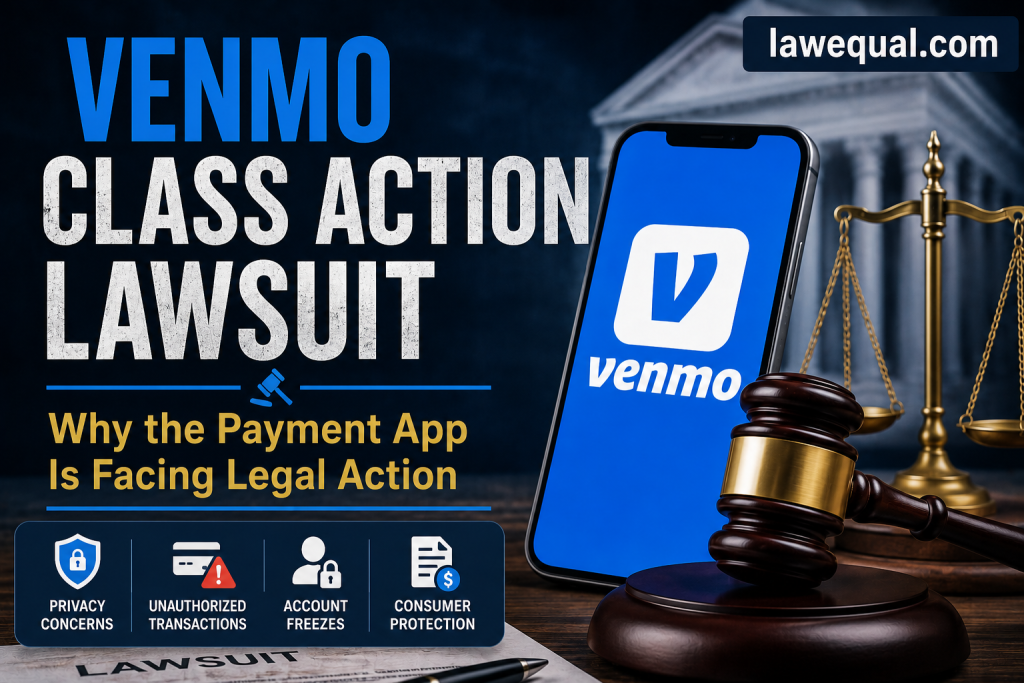
Venmo has faced legal scrutiny over several consumer-related concerns during the past few years. While many users enjoy the convenience of sending and receiving money instantly, others have reported problems involving privacy, unauthorized transfers, frozen accounts, delayed access to funds, and customer support.
Regulators and plaintiffs argue that some of these practices may have harmed consumers or failed to meet legal requirements. These concerns have resulted in lawsuits, government investigations, and regulatory settlements.
The legal actions do not necessarily mean every allegation has been proven in court. Instead, they represent claims that have been raised by consumers or government agencies and addressed through litigation or settlements.
Background of the Venmo Lawsuit
Venmo, owned by PayPal Holdings, has become one of the leading digital payment platforms in the United States.
Since its launch, the app has processed billions of dollars in peer-to-peer transactions each year.
As the platform grew, consumer complaints also increased. Users reported issues such as unauthorized account access, delayed transfers, frozen balances, and confusion over privacy settings.
Government agencies also reviewed whether Venmo properly informed users about fund availability and privacy controls. These concerns eventually led to legal actions and regulatory enforcement.
Although many users continue using Venmo without problems, the lawsuits focus on situations where consumers believe they experienced financial losses or privacy-related issues.
Key Allegations Against Venmo
Several allegations have appeared in lawsuits and regulatory actions involving Venmo. These allegations vary depending on the specific legal case.
Privacy and Data Sharing Concerns
One of the biggest concerns involves user privacy.
Some lawsuits claim that Venmo failed to protect certain personal information or did not clearly explain how transaction details could become visible to other users.
Many users were surprised to learn that transaction activity could be publicly visible unless privacy settings were changed manually.
Privacy advocates argue that payment information should receive stronger default protection.
Unauthorized Transactions and Fraud Claims
Another common complaint involves unauthorized payments.
Some users reported that hackers gained access to their accounts and transferred money without permission.
Others claimed they struggled to recover stolen funds after reporting fraudulent activity.
The lawsuits argue that payment providers should maintain strong fraud prevention systems and respond quickly when unauthorized transactions occur.
Account Freezes and Fund Hold Allegations
Many complaints involve frozen accounts.
Some customers say their Venmo accounts were temporarily restricted without sufficient explanation.
Others reported that money remained unavailable for extended periods while account reviews were completed.
For people who relied on Venmo for daily payments or business transactions, these delays created financial stress.
Consumer Protection Issues
Consumer protection laws require companies to provide accurate information and fair treatment.
Some legal claims argue that Venmo did not always communicate clearly about transaction processing, account restrictions, or dispute resolution procedures.
Plaintiffs also claim customer support responses were sometimes slow or incomplete when serious account issues occurred.
Venmo has stated that it works to improve security, prevent fraud, and comply with applicable consumer protection laws.
Venmo Class Action Lawsuit Timeline
Understanding the timeline helps users follow how the legal situation has developed.
Early Growth of Venmo
Venmo quickly became one of America’s most widely used mobile payment apps. Millions of people adopted the service for personal payments, shopping, and shared expenses.
As usage increased, customer complaints also became more common.
Consumer Complaints Increase
Users began reporting issues involving privacy settings, unauthorized payments, delayed transfers, frozen balances, and customer service experiences.
These complaints attracted attention from regulators and consumer rights organizations.
Regulatory Investigation
Government agencies reviewed whether Venmo properly informed users about important aspects of its service, including fund availability, account security, and privacy practices.
These investigations examined whether consumers received accurate information before using the platform.
Legal Actions Filed
Individual lawsuits and class action cases were filed alleging consumer harm.
Some cases focused on privacy issues, while others involved account restrictions, unauthorized transactions, or consumer protection claims.
Each lawsuit has different legal arguments depending on the specific facts presented.
Ongoing Developments
Legal proceedings continue to evolve as courts review claims, parties negotiate settlements, and regulators monitor compliance.
Some cases have already been resolved, while others remain active or are still under review.
Users should always verify whether a particular lawsuit applies to their situation before filing any claim.
Current Status of the Venmo Class Action Lawsuit (2026)
The Venmo Class Action Lawsuit continues to be a topic of interest for users who want to know whether they may qualify for compensation or if new legal developments affect their rights. As of 2026, there is no single nationwide class action settlement covering every complaint made against Venmo. Instead, different legal matters and regulatory actions have addressed separate issues involving privacy, unauthorized transactions, consumer protection, and account management.
Some investigations have already ended through regulatory settlements, while certain private lawsuits have been resolved individually or continue through the court system. Because multiple legal actions exist, users should carefully identify which case applies to their situation before expecting any payment.
Venmo remains one of the largest digital payment platforms in the United States and continues updating its policies, security features, and customer support processes. These improvements do not automatically resolve earlier claims made in lawsuits.
Also Read: Isotonix Lawsuit
Has Venmo Agreed to a Settlement?
One of the most common questions people ask is whether Venmo has reached a class action settlement.
The answer depends on which legal case is being discussed. Some government investigations have ended with agreements requiring Venmo to improve its business practices. Other private lawsuits have resulted in settlements, while some remain pending or have been dismissed.
Not every lawsuit leads to financial compensation for users. In many cases, settlements require companies to change business practices instead of paying cash to every customer.
If a future nationwide settlement becomes available, the court will normally approve detailed settlement terms before payments begin.
Regulatory Settlements
Certain government actions required Venmo to improve disclosures about fund availability, strengthen privacy practices, and provide clearer information to consumers.
These agreements focused on protecting users rather than creating large public payout programs.
Private Class Actions
Private lawsuits usually seek financial compensation for affected users.
Depending on the facts of each case, settlements may include:
- Cash payments
- Account credits
- Reimbursement for financial losses
- Attorney fees
- Business practice changes
Each settlement has different eligibility requirements.
Who Is Eligible to Join the Venmo Class Action Lawsuit?
Eligibility depends entirely on the specific lawsuit.
Not every Venmo user automatically qualifies simply because they have an account.
Courts usually define a “class” based on certain conditions that affected users must meet.
Common eligibility requirements may include:
- Having a Venmo account during a specific time period.
- Experiencing unauthorized transactions.
- Losing money because of alleged misconduct.
- Having personal information affected by the issues raised in the lawsuit.
- Meeting the legal definition established by the court.
Some lawsuits only apply to residents of certain states, while others may cover users across the United States.
If a settlement receives final approval, eligible users are often notified by email or regular mail.
Who May Not Qualify?
Some users may not qualify even if they regularly use Venmo.
Examples include:
- Accounts opened after the eligible period.
- Users outside the covered jurisdiction.
- Customers who did not experience the issues involved in the lawsuit.
- Individuals who previously opted out of the settlement.
Each settlement administrator publishes the official eligibility rules after court approval.
How to File a Venmo Class Action Lawsuit Claim
If a settlement becomes available, filing a claim is usually straightforward.
Most class action settlements provide an online claim form that can be completed in a few minutes.
The process generally includes several steps.
Confirm Eligibility
Read the settlement notice carefully.
Check whether your account and circumstances meet the eligibility requirements.
Complete the Claim Form
Provide accurate personal information.
You may need to include:
- Full name
- Mailing address
- Email address
- Phone number
- Venmo account information
Always review the form before submitting it.
Upload Supporting Documents
Some settlements require proof showing that you qualify.
Examples include transaction records, account statements, or emails related to the dispute.
Not every claimant will need additional documentation.
Submit Before the Deadline
Late claims are usually rejected.
Always submit your claim before the official filing deadline.
After submission, keep a copy of your confirmation number or email.
Required Documents Before Filing a Claim
Different settlements require different evidence.
The stronger your documentation, the easier it may be to verify your claim.
Common documents include:
- Venmo account statements
- Transaction history
- Payment confirmations
- Screenshots of disputed transactions
- Customer support emails
- Identity verification documents
- Bank statements showing related payments
- Settlement notice (if received)
Do not send original documents unless specifically requested.
Digital copies are usually accepted.
Important Deadlines to Watch
Every class action settlement follows a strict legal schedule.
Missing a deadline could prevent you from receiving compensation.
Important dates often include:
Claim Filing Deadline
This is the final day to submit your claim.
Claims filed after this date are generally denied.
Exclusion Deadline
If you want to keep your right to file your own lawsuit instead of joining the settlement, you must opt out before this deadline.
Objection Deadline
Class members who disagree with the proposed settlement may submit written objections before the court hearing.
Final Approval Hearing
The judge reviews the proposed settlement.
If approved, payment processing usually begins after any appeals are resolved.
How Much Could the Settlement Payout Be?
Many people search for the expected settlement amount.
The truth is that payout amounts vary significantly from one class action to another.
Several factors influence individual payments.
These include:
- Total settlement fund
- Number of approved claims
- Attorney fees
- Administrative costs
- Individual financial losses
- Court-approved distribution formula
Some settlements pay every eligible claimant the same amount.
Others calculate payments based on documented losses.
Until a settlement receives final court approval, no exact payment amount can be guaranteed.
Factors That Affect Individual Payments
Your payment may depend on:
- The severity of your losses.
- The number of valid claims filed.
- Whether additional documentation supports your claim.
- The final settlement agreement approved by the court.
Because every case is different, estimates published online should be viewed cautiously unless confirmed by official court documents.
When Will Settlement Payments Be Sent?
Settlement payments are rarely sent immediately after a lawsuit ends.
Several legal steps must happen first.
These typically include:
- Court approval.
- Completion of appeals.
- Claim verification.
- Payment calculation.
- Distribution by the settlement administrator.
Payments may be issued through:
- Direct deposit
- Mailed checks
- Digital payment services
- Prepaid debit cards
Processing can take several months after final approval.
Claimants should monitor official settlement updates for payment announcements and avoid relying on unofficial rumours.
FTC Action Against Venmo Explained
Many people confuse the Venmo Class Action Lawsuit with the action taken by the U.S. Federal Trade Commission (FTC). While both involve concerns about Venmo’s business practices, they are different legal processes.
The FTC is a government agency that protects consumers from unfair or deceptive business practices. Instead of filing a private lawsuit for damages, the FTC investigates whether a company has violated consumer protection laws.
In Venmo’s case, the FTC alleged that the company made misleading statements about fund availability, account security, and privacy settings. The agency also raised concerns about how Venmo handled unauthorized transactions and account security.
Venmo resolved the FTC action by agreeing to improve several business practices. The company did not admit wrongdoing but agreed to comply with specific requirements designed to better protect users.
Why the FTC Became Involved
The FTC reviewed complaints from consumers and examined whether Venmo provided accurate information about its services.
The investigation focused on several important issues, including:
- How quickly transferred funds became available.
- Whether users understood privacy settings.
- How unauthorized payments were handled.
- The security measures used to protect accounts.
The goal was to improve transparency and consumer confidence in digital payment services.
Changes Required After the FTC Action
As part of the regulatory action, Venmo agreed to make several improvements.
These included:
- Providing clearer information about fund availability.
- Strengthening security measures.
- Improving privacy disclosures.
- Offering better explanations about account protections.
- Enhancing customer communication.
These changes were intended to reduce confusion and improve the overall user experience.
How the Venmo Lawsuit Differs From the Plaid Settlement
People often compare the Venmo Class Action Lawsuit with the Plaid settlement because both involve financial technology services. However, they concern different companies and different legal issues.
Understanding the differences helps users avoid confusion.
Venmo Lawsuit
The Venmo legal actions mainly focus on:
- Consumer protection.
- Privacy concerns.
- Unauthorized transactions.
- Account freezes.
- Fund availability.
- Customer service issues.
The claims are directed at Venmo and its handling of payment services.
Plaid Settlement
The Plaid settlement involved allegations that Plaid collected user financial data without providing sufficient transparency.
Plaid provides technology that connects banking information with many financial apps.
The settlement focused primarily on data collection and privacy rather than payment processing.
Key Differences
Although both cases involve financial technology, they address different legal questions.
| Venmo | Plaid |
|---|---|
| Payment platform | Financial data connection service |
| Focus on transactions | Focus on data collection |
| Unauthorized payment concerns | Banking information concerns |
| Consumer protection claims | Privacy and data-sharing claims |
Users should verify which settlement applies before filing any claim.
What Venmo Users Should Do Now
If you use Venmo regularly, there are several practical steps you can take while legal matters continue.
Even if you are not directly affected by the Venmo Class Action Lawsuit, protecting your account is always a good idea.
Monitor Your Transactions
Check your account frequently.
Look for unfamiliar payments, unexpected transfers, or changes you did not authorize.
Reporting suspicious activity quickly may improve your chances of resolving problems.
Update Your Password
Choose a strong and unique password.
Avoid using the same password across multiple websites.
Consider changing your password periodically for added security.
Enable Two-Factor Authentication
Two-factor authentication adds another layer of protection.
Even if someone learns your password, they may still be unable to access your account.
This is one of the simplest ways to improve account security.
Review Privacy Settings
Venmo allows users to manage who can view their payment activity.
Review your privacy settings regularly to ensure they match your preferences.
Many users choose to limit transaction visibility to friends or only themselves.
Save Important Records
Keep copies of:
- Payment confirmations.
- Transaction history.
- Customer support conversations.
- Email notifications.
- Bank statements related to Venmo.
These records may help if you ever need to dispute a transaction or support a legal claim.
Stay Updated Through Official Sources
Avoid relying on social media rumours or unofficial websites.
Settlement announcements, eligibility rules, and payment information should always come from official court documents or authorised settlement administrators.
How to Protect Your Venmo Account During Ongoing Litigation
Regardless of the lawsuit, protecting your account remains essential.
Cybercriminals often take advantage of news about lawsuits by creating fake emails or phishing websites.
Follow these best practices to keep your account safe.
Never Share Verification Codes
Venmo employees will never ask for your one-time security code.
If someone requests it, treat the message as suspicious.
Watch for Phishing Emails
Scammers often send fake settlement notices.
Check the sender’s email address carefully before clicking any links or downloading attachments.
Verify Payment Requests
Only send money to people you know and trust.
Double-check usernames before completing a transaction.
A small typo could send money to the wrong person.
Keep the App Updated
Install the latest version of the Venmo app.
Updates often include security improvements and bug fixes that help protect your account.
Use Secure Internet Connections
Avoid logging into financial accounts while connected to public Wi-Fi unless you are using a trusted virtual private network (VPN).
Secure networks reduce the risk of account theft.
Frequently Asked Questions
Is the Venmo Class Action Lawsuit Legitimate?
Yes. Multiple lawsuits and regulatory actions involving Venmo have been filed over the years. However, each case is different. Always verify information through official court records or authorised settlement administrators before submitting personal information.
Can I Still File a Claim?
That depends on the specific lawsuit.
Some settlements have already closed, while others may still accept claims if they remain within the official filing period.
Always review the eligibility rules and deadlines for the case that applies to you.
How Do I Know If I Qualify?
Eligibility depends on the settlement terms.
Factors may include:
- When you used Venmo.
- The type of issue you experienced.
- Your location.
- Whether your account falls within the class definition established by the court.
Many settlement administrators notify eligible users directly by email or regular mail.
Do I Need Proof of Financial Loss?
Not always.
Some settlements require documentation showing financial harm, while others only require proof that you meet the eligibility criteria.
The official claim instructions explain exactly what documentation is needed.
Will Accepting a Settlement Affect My Right to Sue?
In many class action lawsuits, accepting a settlement means you give up the right to file your own lawsuit about the same legal issues. This is called releasing your claims.
Before accepting any payment, read the settlement agreement carefully. It explains which legal rights you may be giving up.
If you believe your losses are much greater than the settlement amount, you may have the option to opt out before the court’s deadline. Opting out allows you to pursue your own legal claim, but you should consider seeking independent legal advice before making that decision.
Every class action settlement has different rules, so always review the official settlement documents.
How Long Do Class Action Lawsuits Usually Take?
Class action lawsuits often take a long time to resolve. Some cases finish within one or two years, while others continue for several years due to appeals, negotiations, and court procedures.
Several factors affect how long a lawsuit takes.
Complexity of the Case
Cases involving millions of users, technical evidence, or multiple legal issues usually require more time.
The court must carefully review all evidence before making important decisions.
Settlement Negotiations
Many class action lawsuits end through negotiated settlements rather than full trials.
Negotiations can take months before both parties reach an agreement.
Court Approval
Even after both sides agree on a settlement, the court must review it to ensure it is fair for all class members.
This approval process may include public hearings and a period for objections.
Appeals
Sometimes one or more parties appeal the court’s decision.
Appeals can delay settlement payments until the legal process is complete.
Claim Review and Payment Distribution
Once the settlement receives final approval, the settlement administrator reviews every submitted claim.
After verifying eligible claims, payments are calculated and distributed.
Because thousands—or even millions—of claims may be submitted, this stage can also take several months.
Final Thoughts
The Venmo Class Action Lawsuit continues to generate interest among users who want to understand their legal rights and whether they may qualify for compensation. The legal actions involve several issues, including privacy concerns, unauthorized transactions, account freezes, and consumer protection.
Although some regulatory actions have already been resolved, other legal matters may still progress through the courts. The outcome depends on the facts of each case, court decisions, and any future settlement agreements.
If you believe you were affected by one of the issues discussed in this article, keep copies of your transaction records, monitor official court announcements, and review any settlement notices carefully. Filing a claim without confirming eligibility may lead to unnecessary delays or rejection.
For current Venmo users, practising good account security is just as important as following legal updates. Use a strong password, enable two-factor authentication, review your privacy settings regularly, and watch for phishing scams pretending to offer settlement payments.
As new developments emerge, the Venmo Class Action Lawsuit may continue to evolve. Staying informed through official legal notices and understanding your rights will help you make better decisions if a settlement or claims process becomes available in the future.